
In Sri Lanka, evening tea is rarely just tea on its own. Around four o’clock, bakeries, roadside shops and home kitchens alike fill with short eats, a broad, informal category of small savoury bites that exist for exactly this moment: a pause in the day, shared with family, friends or colleagues, with a hot cup close at hand.
Where the name itself comes from
‘Short eats’ is itself a slightly unusual piece of Sri Lankan English, one of several local terms that developed their own specific meaning on the island rather than following standard British usage. The phrase describes small savoury snacks, typically pastries, fried bites and the like, eaten in variety rather than as a single dish, in a manner that food writers have compared to dim sum or tapas elsewhere in the world. The term is documented as being in use by at least the 1960s and, while most strongly associated with Sri Lanka today, is also recognised in parts of southern India. It’s a good example of how English absorbed and adapted locally in Sri Lanka over generations of colonial and post-colonial history, producing vocabulary that wouldn’t be immediately obvious to an English speaker from anywhere else.
The classics, and where they come from
Short eats, as a category, are really a culinary record of everyone who ever arrived on the island with their own cooking traditions. Food writers covering Sri Lankan cuisine consistently point to the same pattern: rolls arrived with Chinese traders and settlers, cutlets and patties with the British, and vadai with Tamil communities with roots in South India, and all of them were absorbed, adapted and seasoned with Sri Lankan spice until they became something distinctly local rather than simply borrowed. That layered, multi-origin history is really what makes the short-eats table interesting beyond the food itself: it’s a snapshot of the island’s long history of trade, migration and colonial contact, all sitting together on the same tray.
- Fish or vegetable patties — flaky, layered pastry parcels with a spiced filling, with roots tracing back to colonial-era baking traditions adapted with local spice.
- Chinese rolls — crumbed pancakes rolled around a curried fish or vegetable filling and deep fried; the name reflects a borrowed culinary influence rather than a literal Chinese origin.
- Cutlets — spiced fish or potato mixtures shaped into balls or patties, coated and fried until crisp outside and soft within, with some resemblance to Portuguese-influenced fried snacks found elsewhere on the old trade routes.
- Vadai — crunchy lentil fritters, often studded with curry leaf, with roots in South Indian Tamil cuisine and now firmly part of the island’s own short-eats tradition.
- Fish buns — soft, slightly sweet bread filled with a spicy fish mixture, a genuinely distinctive combination of sweet dough and savoury heat.
Why short eats and tea work so well together
Most short eats are fried, spiced and often genuinely hot in the chilli sense, and a strong, brisk black tea does real, practical work alongside them, not just a pleasant pairing but a functional one. The tea’s tannins and brisk astringency help cut through the oiliness of fried pastry, cleansing the palate between bites rather than letting richness simply accumulate, while a splash of milk softens the lingering heat of a well-spiced cutlet or vadai. A full-bodied Kandyan-style cup, the kind Pilimathalawa in particular is known for, tends to be the ideal partner precisely because it has enough strength and body to stand up to assertive, spicy flavours without disappearing underneath them.
| Short eat | Character | Best paired with |
|---|---|---|
| Fish/vegetable patties | Flaky, moderately spiced | A standard brisk Ceylon black tea, plain or with milk |
| Chinese rolls | Rich, curried filling | A full-bodied, strong black tea with milk |
| Cutlets | Spiced, often chilli-forward | A strong, full-bodied cup; milk helps soften the heat |
| Vadai | Crunchy, lentil-based, mildly spiced | A brisk tea, plain, to contrast the fritter’s density |
| Fish buns | Sweet bread, spicy filling | A classic milk tea, which bridges the sweet and savoury notes |
The bakery display, and how it’s organised
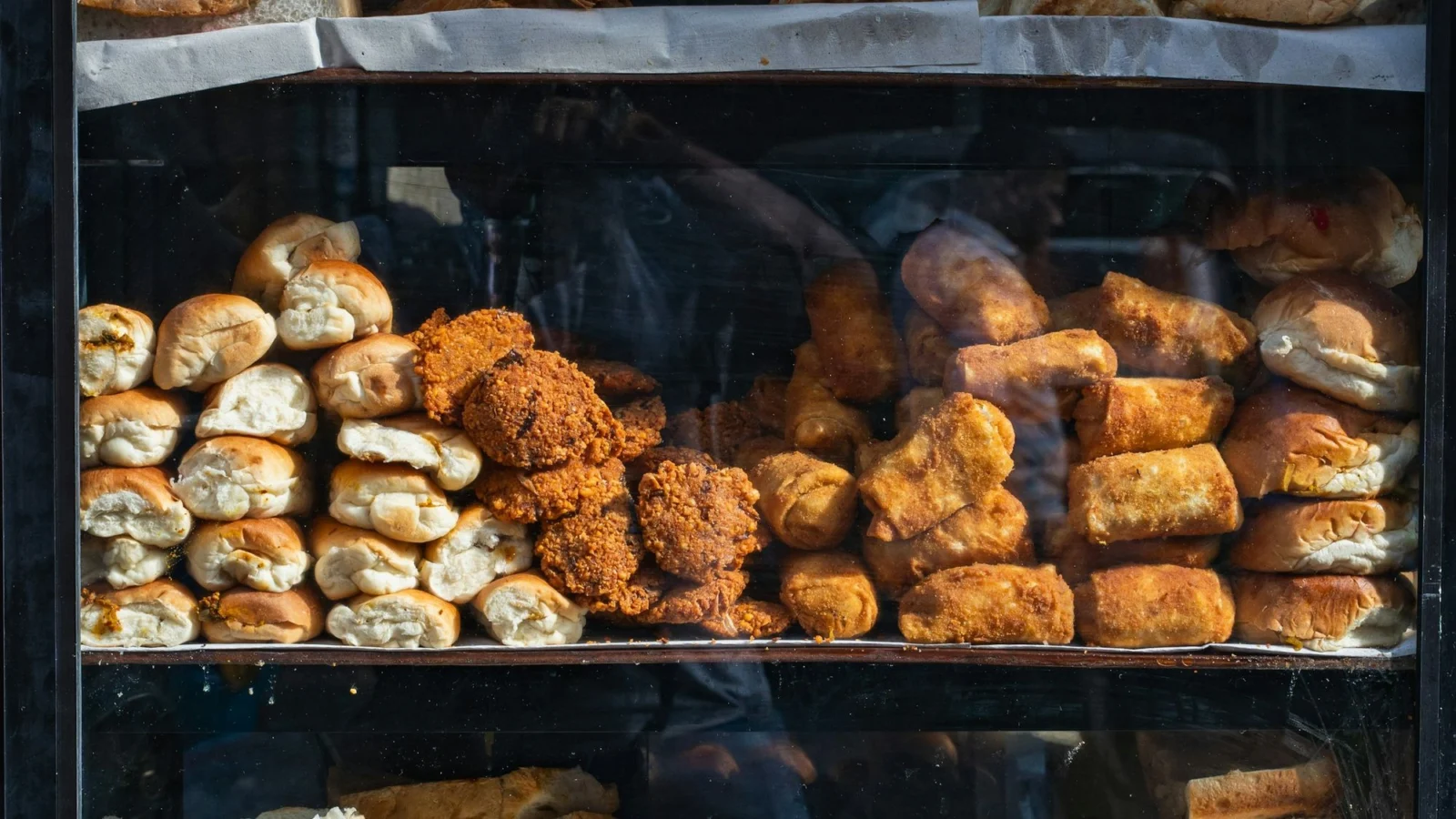
Walk into a Sri Lankan bakery in the late afternoon and you’ll typically find short eats arranged by type on open trays or in a glass display case, savoury items grouped together, usually with sweets like butter cake, love cake or kavum displayed separately nearby. This isn’t a formal menu system so much as an organic, practical layout that’s developed across thousands of bakeries independently landing on roughly the same logic: savoury first, something sweet to finish, and tea to tie the whole short pause together.
Reading the display case
If you’re new to a Sri Lankan bakery, the display case itself is worth a slow look before you order, since colour and shape generally signal what’s inside without needing a translated menu. Pale, blistered pastry usually means a patty, flaky and layered around a spiced filling; a dark, crumbed, torpedo-shaped roll is a Chinese roll; small, evenly browned fried balls or ovals are cutlets; a flat, lace-edged, deep golden disc is vadai; and a softer, paler, slightly domed bun is a fish bun. None of this is a rigid rule across every bakery, but it holds often enough to be a genuinely useful first guess if you’re pointing rather than asking by name.
A note on freshness and timing
Short eats are, almost by definition, meant to be eaten fresh and still a little warm, which is part of why the roughly four o’clock timing matters as much as it does; most bakeries bake or fry a fresh batch specifically for the afternoon rush, rather than holding morning stock all day. If you’re visiting a bakery hoping to try short eats at their best, mid-to-late afternoon is genuinely the right window, both for freshness and for catching the full range before the day’s batch sells out.
Something sweet to finish
A proper short-eats tea time rarely stops at the savoury course. Finish with a slice of butter cake, a dense, rich love cake, or a piece of kavum, and very often a second cup of tea alongside it. Tea time in Sri Lanka is less a formal meal with courses than a deliberate pause in the day’s rhythm, a moment carved out specifically to sit, eat something good, and talk, which is really the whole point of the ritual beyond the food itself.
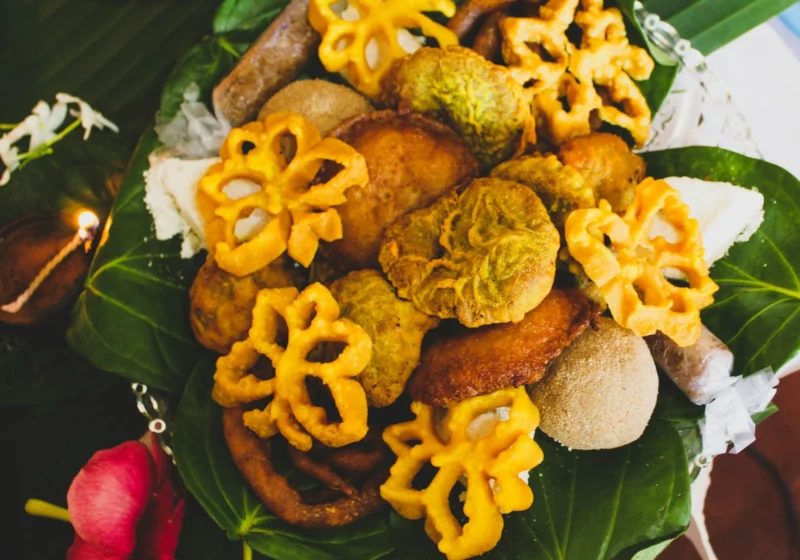
Many of the sweets that turn up alongside short eats are the same ones found on the Avurudu New Year table, kavum, oil cakes made from rice flour and treacle, and kokis, a crisp, deep-fried batter sweet believed to have Dutch colonial roots, its name likely derived from the Dutch koekjes, meaning biscuits or little cakes. Outside the New Year season these same sweets are simply part of the everyday bakery repertoire, which says something about how thoroughly festival food has woven itself into ordinary daily life on the island, rather than being reserved only for special occasions.
The kade: where this ritual really lives
While bakeries supply much of the short-eats trade in towns and cities, the small roadside kade, a simple local shop or stall, is where the tradition feels most alive, especially outside the biggest cities. A kade typically keeps a few short eats warm under glass, brews tea by the pot rather than the cup, and serves a steady stream of regulars throughout the day, workers on a break, students after school, neighbours catching up, rather than functioning as a destination café in the way the word might suggest elsewhere. The pace is unhurried but the turnover is constant, cup after cup, plate after plate, which is part of what makes a good kade feel like a genuine community fixture rather than simply a food vendor.
A note on names across the island
Some of these snacks go by slightly different names depending on where you are and which community you ask, and recipes vary household to household and shop to shop just as much as the names do. Treat the descriptions here as a reliable general guide to what you’ll typically find and taste, not as the single, fixed, universally agreed version of each dish.
Hosting your own short-eats tea time
If you’d like to recreate this at home, you don’t need to make everything from scratch. A reasonable spread is two or three savoury short eats (patties and cutlets are the easiest to source or make ahead), one sweet item, and a pot of strong, properly brewed black tea with milk and sugar on the side so guests can adjust to their own taste. Brew generously; a short-eats gathering tends to call for refills more than a single pot usually allows.