
Every batch of Ceylon tea passes through a taster’s judgement before it ever reaches a shop shelf or an auction catalogue. A professional taster might work through several hundred samples in a single week, and their verdict, often just a handful of precise words, decides how a particular lot is graded, blended, priced and ultimately sold. It is a skilled, demanding job that most tea drinkers never see, and understanding how it works makes it much easier to taste more carefully yourself.
A standardised set-up, on purpose
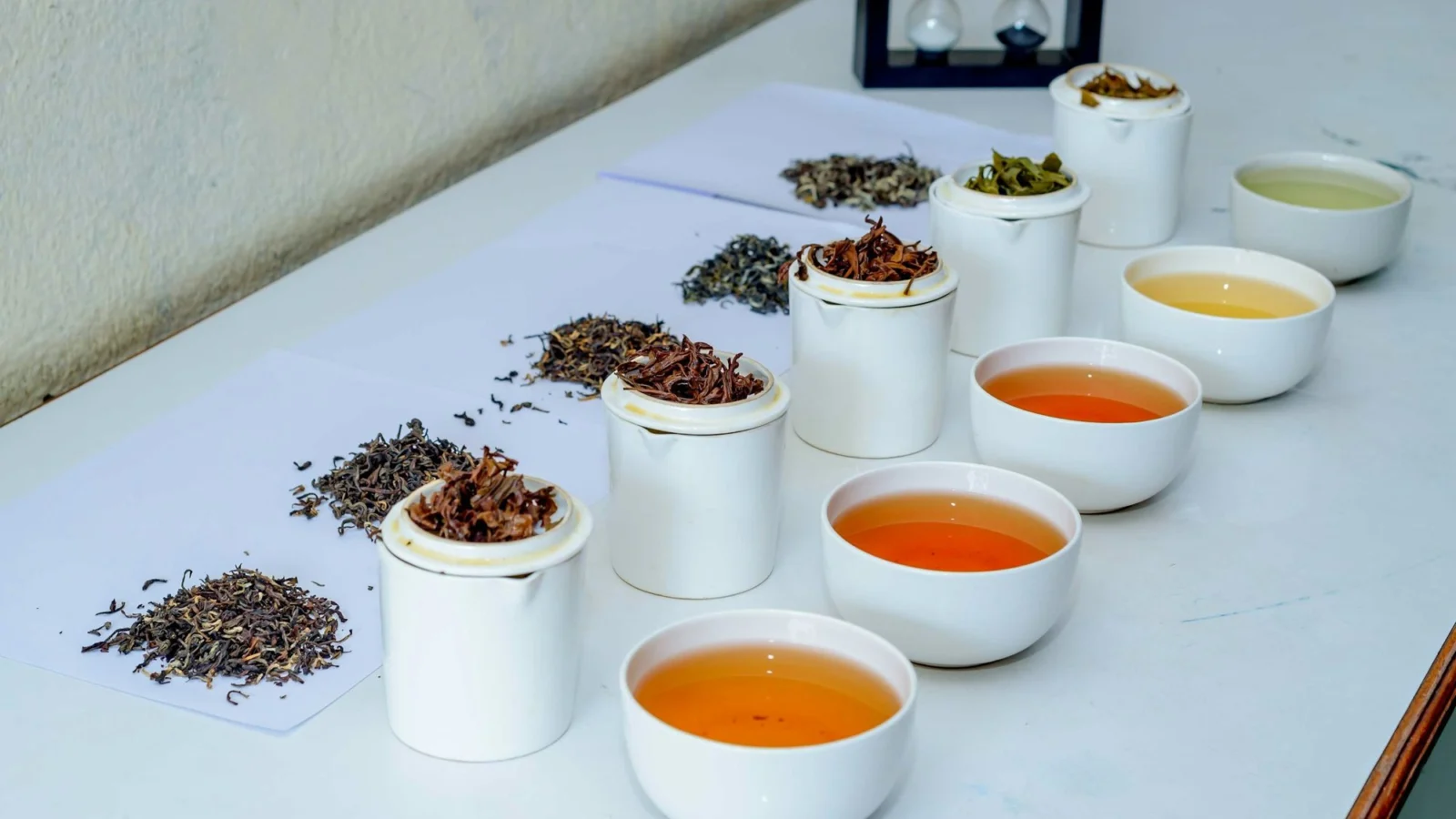
Fairness is the whole point of the professional tasting protocol, and that means removing every variable except the tea itself. Each sample is weighed to a fixed amount, brewed in boiling water for a fixed time, usually five or six minutes, in identical small, white, lidded cups arranged in a row. There is even an internationally recognised standard method for this, ISO 3103, which specifies exactly how a sample should be prepared for sensory evaluation so that results are comparable between tasters, factories and even countries.
Why white cups?
White porcelain is used deliberately because it shows the true colour and clarity of the liquor without any tint of its own. A taster relies heavily on colour, brightness, depth, any cloudiness, as one of the first signals of how well a tea was made, and a coloured or patterned cup would make that judgement unreliable.
Timing is treated just as strictly as the cup itself. A standard timer, usually five or six minutes depending on the house protocol being followed, runs for every single sample without exception, and tasters generally regard any deviation from the agreed time as invalidating the comparison. This rigidity can seem excessive to an outsider, but it’s precisely what allows a taster in one city to compare notes meaningfully with a taster in another, since both know the samples were prepared under identical, agreed conditions rather than whatever felt convenient on a given day.
What a taster actually examines
- The dry leaf — its size and consistency (which grade it is), its twist and colour, and whether golden or silver tips are present.
- The infused leaf — tipped out after brewing and examined for colour and evenness. A bright, coppery, even infusion is generally a good sign of careful processing.
- The liquor — its colour, clarity and brightness, judged in the white cup under good, consistent light.
- The taste itself — body, briskness, strength and any flaws, assessed last and most carefully.
The famous slurp, and why it isn’t just theatre
Tasters sip loudly and deliberately from a spoon, drawing the liquid across the tongue with a rush of air rather than simply swallowing a mouthful. This isn’t a quirky habit; it’s a genuinely effective technique for spreading the tea rapidly over as many taste receptors as possible and for carrying its aroma up to the olfactory receptors at the back of the nose, which contribute enormously to how we perceive flavour. After evaluating a sample this way, the taster spits rather than swallows, both because swallowing hundreds of cups a day isn’t practical and because it keeps the palate fresh and unbiased for the next sample in the row.
What a scoring note typically covers
| Element | What’s being judged |
|---|---|
| Appearance (dry leaf) | Grade consistency, twist, colour, presence of tip |
| Infusion | Colour and evenness of the spent, infused leaf after brewing |
| Liquor colour | Brightness, depth and clarity in the cup |
| Aroma | Intensity and character, e.g. malty, floral, fresh |
| Taste | Body, briskness, strength and the presence of any defects |
| Overall verdict | A concise summary, often just a few trade terms, used by buyers |
From the tasting table to the auction floor
At the Colombo tea auction and others like it, buyers often never see or taste a lot themselves before placing a bid; they rely entirely on a broker’s or taster’s written notes, expressed in the shared vocabulary of the trade. A lot described as bright, brisk and well-made will typically draw stronger competing bids than an otherwise similar lot marked flat or thin, which means a taster’s few words of judgement can meaningfully move the price a grower eventually receives for their crop. This is really the economic heart of why the profession exists at all: it turns subjective sensory experience into a shared, trusted basis for a very real, very large international trade.
A path into the profession
Becoming a recognised tea taster typically takes years of guided practice, usually starting as an apprentice under an experienced senior taster at a brokerage or large estate group, tasting alongside them daily and gradually calibrating one’s own palate against theirs. It’s a craft learned by repetition and correction far more than by formal classroom study, closer in spirit to how a sommelier or a master blender develops their palate than to any single qualification you could earn from a course.
A typical day for an estate or brokerage taster
A working taster’s day usually starts early, before the palate has been dulled by food, strong flavours, smoking or even toothpaste, all of which experienced tasters tend to avoid in the hours before a serious tasting session. Samples arrive from the factory floor already weighed into standard sample tins, and a taster might work through dozens of these in a single morning session, each one requiring the full sequence: assess the dry leaf, brew to a strict timer, examine the infused leaf, judge the liquor colour, taste and spit, then write a concise note before moving straight to the next cup. The pace is brisk and the concentration required is considerable, since a lapse in attention on sample forty can be just as costly as one on sample two.
The physical environment matters too
Serious tasting rooms are deliberately plain: good, consistent daylight or daylight-balanced lighting (since warm artificial light distorts colour judgement), a quiet space free of strong cooking smells or perfume, which could interfere with the delicate work of judging aroma, and a dedicated spittoon and rinsing station so the palate can reset between samples. None of this is incidental fussiness; every element of the room is set up to remove anything that might bias a judgement that’s ultimately being trusted, often sight unseen, by a buyer on the other side of the world.
How tasting connects back to the factory floor
A good taster’s job doesn’t end with a verdict passed on to a buyer; the feedback also travels back toward the factory itself. If a particular lot consistently tastes flat, or shows signs of uneven oxidation, that information is valuable to the factory manager making decisions about withering times, rolling pressure or oxidation judgement calls on future batches from the same fields. In this sense, professional tasting functions as a kind of ongoing quality feedback loop for the whole production process, not simply a final checkpoint applied after the fact to a finished, unchangeable product.
The difference between tasting for grading and tasting for blending
It’s worth distinguishing two related but distinct tasks that often happen in the same tasting room. Grading-focused tasting asks a fairly narrow question: does this lot meet the standard expected for its stated grade, and is it free of obvious defects? Blending-focused tasting, which a company’s own in-house taster or master blender typically handles, asks a broader question: how does this particular lot’s character compare with others available right now, and in what proportion would it combine well with other lots to produce a specific, consistent finished blend? Both draw on the same core vocabulary and the same trained palate, but they’re aimed at different decisions, one largely about quality control, the other about creative, deliberate composition.
Palate fatigue, and why tasters pace themselves
Tasting dozens or hundreds of samples in a single session carries a real risk that experienced tasters actively manage: palate fatigue, where repeated exposure to similar flavours gradually dulls sensitivity, making later samples in a long session harder to judge accurately than earlier ones. Experienced tasters work in paced sessions with breaks, drink plain water between groups of samples to reset, and often schedule the most demanding or highest-value lots earlier in the day rather than later, when fatigue is more likely to creep in. It’s a reminder that even highly trained sensory judgement has practical physiological limits, and good practice in the trade exists specifically to work within them rather than ignore them.
Try a simplified version at home
You don’t need professional equipment to borrow the core idea. Brew two different teas side by side, using exactly the same amount of leaf, the same water, and the same steeping time for both, then taste them one after the other rather than days apart. Pay attention, in order, to the dry leaf, the colour in the cup, the aroma, and finally the taste itself. Most people who try this comparison honestly are surprised by how much more they notice than when drinking a single cup out of habit, which is really the whole reason professional tasters work the way they do. If you’d like a shared vocabulary to describe what you’re tasting, our companion glossary of tasting terms, bright, brisk, body and the rest, is a good place to start.