
It’s one of the most common questions we hear: is loose leaf tea actually better than tea bags, or is that just marketing? The honest answer is more interesting than a simple yes or no. Loose leaf and bagged tea can genuinely come from the same bushes, processed in the same factory, and still taste meaningfully different in the cup. The reason is almost entirely about leaf particle size, with a smaller, more recent twist involving what some tea bags are actually made of.
Small leaf, fast brew
Most mass-market tea bags are filled with the smallest grades, broken orange pekoe fannings or dust, because these fine particles brew extremely quickly and consistently. A tea bag’s whole design brief is speed and reliability: a strong, dark, predictable cup within a minute or two, which suits a quick breakfast far better than a leisurely steep would. There’s nothing inferior about this leaf, it’s simply been sorted by size during processing, but the fine particle size does mean it gives up its flavour fast and, if left too long, bitter.
Larger leaf, more to discover
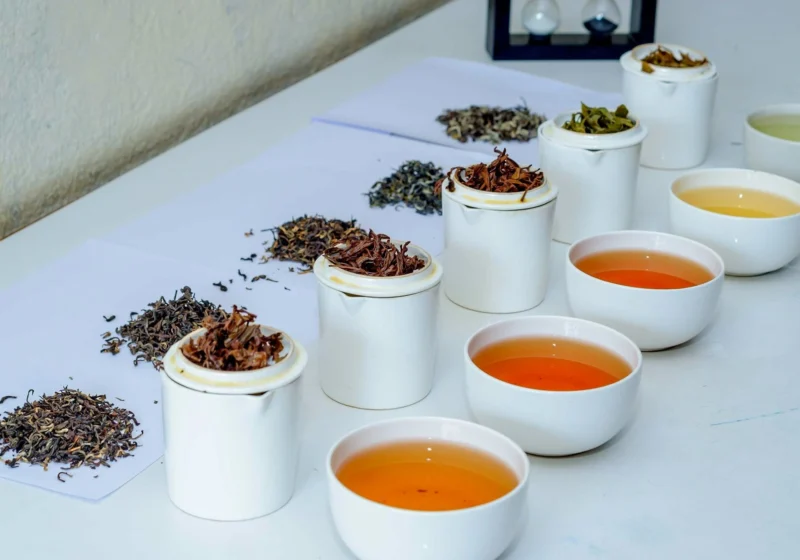
Loose leaf teas are usually sold in whole-leaf or large broken grades that open gradually in hot water. Because they have proportionally less surface area exposed to the water at any given moment, they release their flavour, aroma and colour more slowly and, many tasters find, with more nuance and less harsh bite than a fast-brewing fine grade. Good whole-leaf tea can also often be steeped a second time, since there is more unreleased flavour left in the leaf after a first short infusion than there would be in an already-exhausted fine particle.
The microplastics question, honestly answered
In late 2024, researchers at the Universitat Autonoma de Barcelona published a study finding that commercial tea bags can release very large numbers of microscopic plastic particles into the water when steeped, with nylon mesh bags releasing the most in their test method, and that some of these particles were taken up by human intestinal cells in a laboratory setting. This research has been widely reported, and it’s genuine, peer-reviewed science. It is also, so far, a study of what happens in a lab, not proof of a specific health harm at normal drinking levels. German food safety regulators who reviewed similar findings concluded the amounts involved don’t currently indicate a known health risk, while also agreeing the question deserves continued study. A separate 2026 screening of eight tea bag products found that most released material consistent with polypropylene regardless of what was printed on the box, which is a reminder that packaging claims and actual bag material don’t always match.
What’s proven and what isn’t
Proven: some tea bags release measurable amounts of microplastic particles when steeped in hot water, and laboratory cells can absorb some of these particles. Not yet established: whether this causes any specific harm to a person drinking tea bags at ordinary daily levels. Treat strong claims in either direction with some scepticism until more research is done.
Why loose leaf sidesteps the question entirely
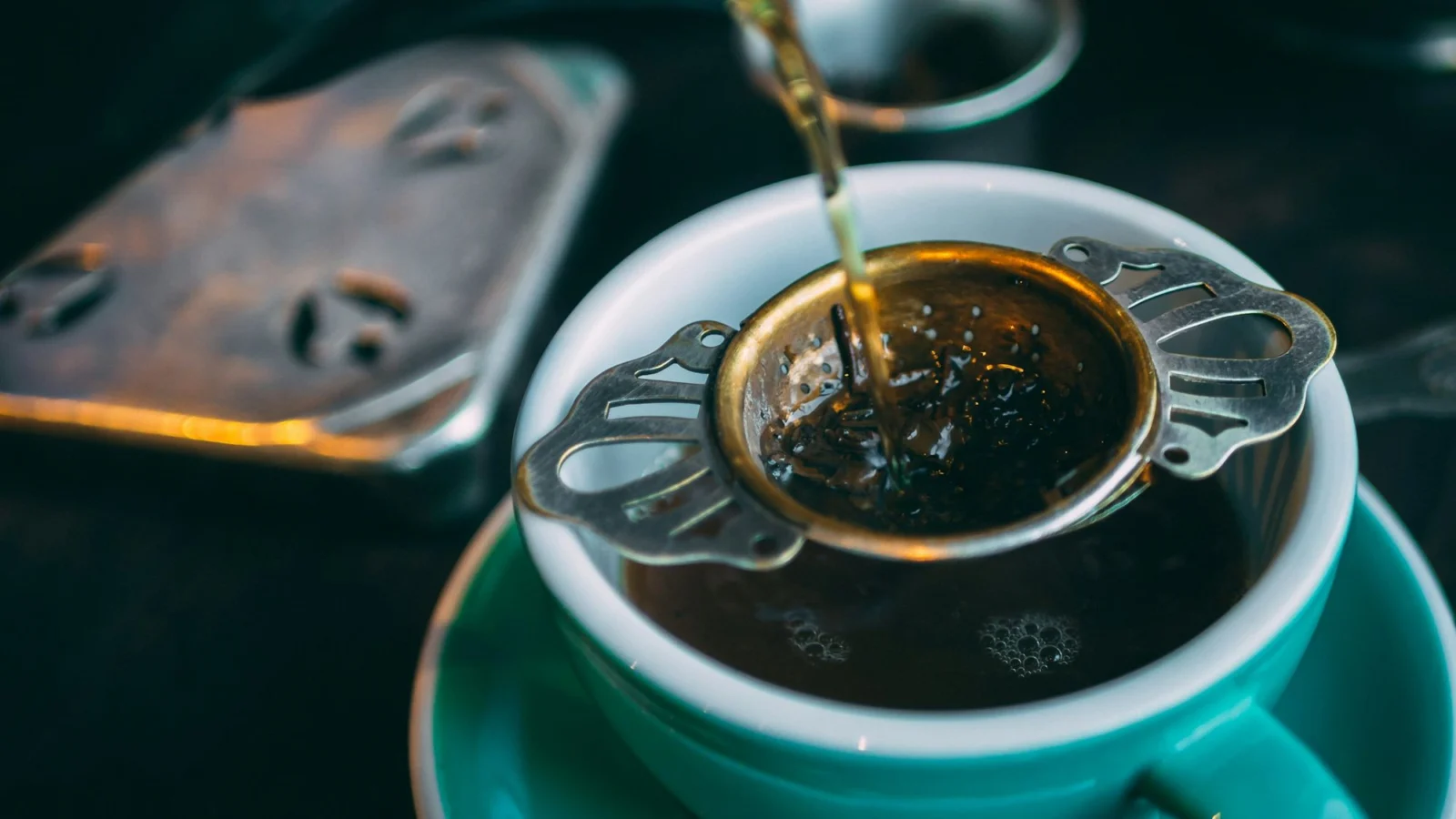
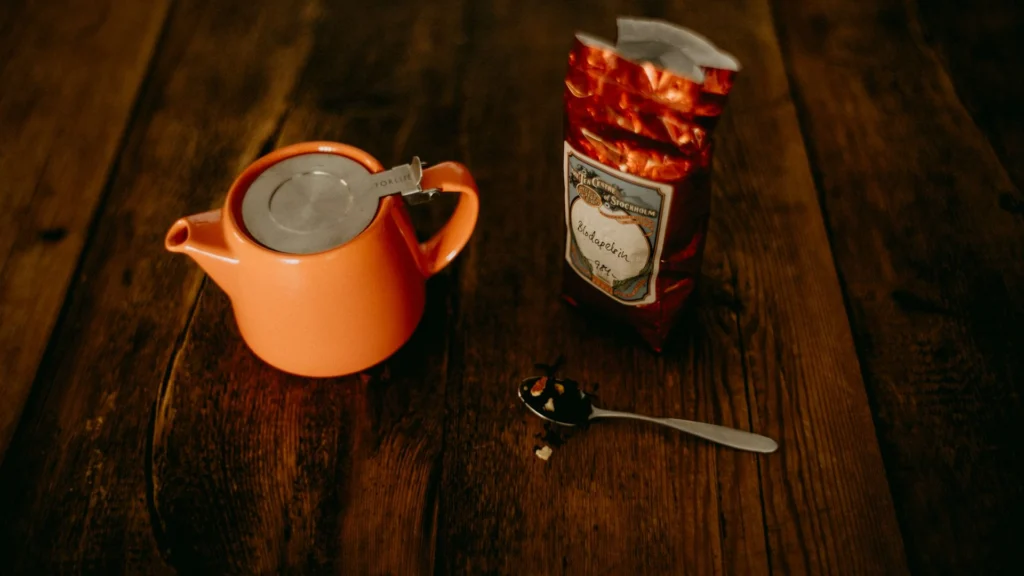
Whatever future research eventually concludes about tea bags, loose leaf brewed in a metal infuser, a ceramic pot, or simply strained through a mesh sieve avoids the plastic-mesh question altogether, since there’s no bag material in contact with the hot water at all. This isn’t a scare tactic, it’s simply an honest, genuine advantage that happens to also come with the flavour and aroma benefits of larger leaf. If you already prefer loose leaf for the taste, this is a pleasant bonus rather than the main reason to choose it.
Making the most of loose leaf at home
- Use one heaped teaspoon, about 2.5 grams, per cup, and don’t skimp — under-leafed tea brewed for the full time tends toward bitterness without ever developing real body.
- Give the leaves room to open fully. A teapot or a reasonably sized infuser basket works far better than a tightly packed metal ball.
- Steep for three to five minutes depending on the grade, then remove the leaves promptly rather than leaving them to continue steeping in the pot.
- Store the remainder in an airtight tin, away from light, heat and strong smells, so the leaf you haven’t used yet stays fresh.
A practical cost comparison
| Format | Typical cost per 100 cups (illustrative) | Convenience | Flavour range |
|---|---|---|---|
| Everyday tea bags | Lower | Highest — no equipment needed | Fast, strong, consistent |
| Pyramid / mesh bags, whole leaf | Mid-range | High | Closer to loose leaf, more room for the leaf to open |
| Loose leaf, whole grade | Varies, often similar to mid-range bags | Needs an infuser or pot | Widest range, more aroma, often brews twice |
What about pyramid bags and ‘premium’ tea bags?
In recent years, many brands have moved toward larger, pyramid-shaped mesh bags that hold whole or large-broken leaf rather than fine fannings or dust. These are a genuine middle ground: the mesh gives the leaf more room to expand than a flat paper bag would, closing some of the gap with true loose leaf, while still offering the convenience of not needing a separate infuser or strainer. They are usually, though not always, made from either nylon mesh or a plant-based material such as PLA (a corn-starch derived plastic), which brings us back to the material question above: the declared material on the box does not always match what independent testing finds, so if the plastic question matters to you specifically, unbagged loose leaf remains the only option that removes the uncertainty entirely.
The environmental angle, briefly
Beyond the health question, there’s also a simpler environmental consideration: loose leaf typically involves far less packaging waste per cup than individually wrapped or bagged tea, since there’s no bag material, string, tag or individual wrapper for each serving, only the tin or pouch the bulk leaf comes in. For households that drink tea daily, switching even some of that consumption to loose leaf can meaningfully reduce the amount of packaging thrown away over a year, independent of any flavour or microplastics considerations.
What about matcha-style powdered tea and other formats?
Powdered or ground tea, where the entire leaf is consumed rather than infused and discarded, is a different case again from both bags and conventional loose leaf. Because you drink the whole particle rather than just what dissolves out of it during a steep, extraction speed and particle size matter far less, though freshness and fine grinding both still affect flavour significantly. Ceylon black tea is not traditionally sold or drunk this way, unlike Japanese matcha, but it illustrates a useful general point: however a tea is formatted, the underlying question is always some version of how much surface area is exposed to water or how much of the leaf you’re actually consuming, and that single idea explains most of the practical differences between formats you’ll encounter.
A note on what grade has to do with any of this
If you’ve read our companion piece on Ceylon tea grades, you’ll recognise that this whole topic is really the grading system in action, just viewed from the tea bag versus loose leaf angle rather than the grade-letters angle. Tea bags are filled almost exclusively with the finest grades, BOPF and dust, precisely because those grades brew fast and strong, which is exactly what a bag is designed to deliver. Loose leaf sold for pot brewing tends to favour whole-leaf and larger broken grades, OP, Pekoe, standard BOP, because those grades reward the slower, more attentive brewing that a pot or infuser allows. The format and the grade inside it are closely linked for good practical reasons, not by accident.
If you want to try switching, start small
You don’t need to overhaul your whole tea cupboard in one go. A reasonable way to try loose leaf without much commitment is to pick up a small amount of a whole-leaf Ceylon tea, a simple metal mesh infuser or even a makeshift strainer, and brew one pot on a weekend morning when you have the extra few minutes to pay attention to it properly. Compare it, side by side if you can, with your usual tea bag. Most people who make this comparison honestly, rather than assuming the answer in advance, notice a real difference in aroma and smoothness, even if they still reach for a quick bag on busy weekday mornings afterward. The goal isn’t to convert entirely, it’s to understand what each format is actually good at, so you can choose deliberately rather than by habit alone.
Neither choice is wrong
There’s no need to feel guilty about a quick tea bag on a rushed morning, and there’s no need to feel precious about always using loose leaf either. They suit different moments. But if you’ve only ever used tea bags, brewing a proper pot of good loose-leaf Ceylon tea, with the time to let it open and develop, is a small, inexpensive luxury that’s well worth trying at least once to see what the fuss is about.