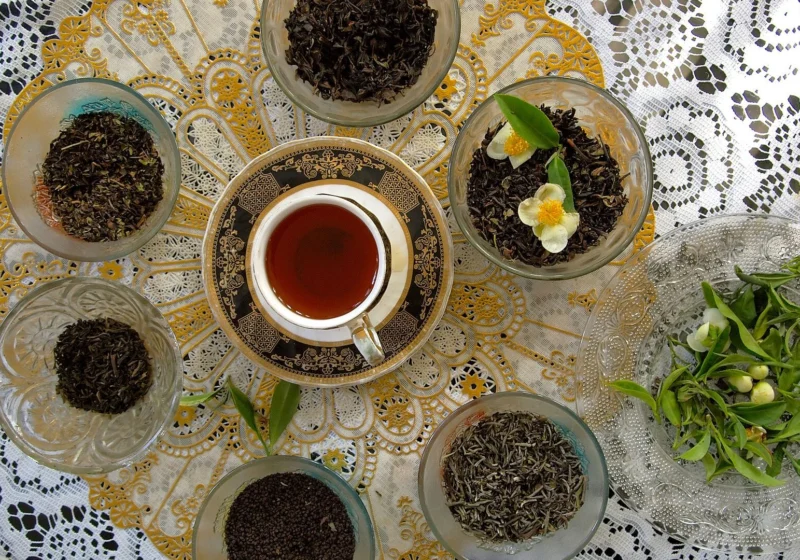

Embilmegama is one of the three Kandyan factories behind Udarata Tea, and when we taste its leaf, one word keeps coming back more than any other: brisk. The cup is bright and lively, with a clean, refreshing finish that leaves the palate feeling sharpened rather than coated, the kind of tea that genuinely helps wake you up in the morning rather than just providing warmth and caffeine.
What ‘brisk’ actually means, and why it matters here
In the tasting vocabulary covered in our companion glossary, brisk describes a pleasant, lively bite on the tongue, the opposite of a flat, dull cup. It’s distinct from simple strength: a tea can be strong without being brisk, heavy and intense but somehow still sluggish in the mouth, and a tea can be brisk without being especially strong, light but genuinely lively. Embilmegama’s character leans firmly toward the brisk end of that spectrum, which is exactly why it’s the estate we reach for when a blend needs lift rather than weight.
Where this character comes from
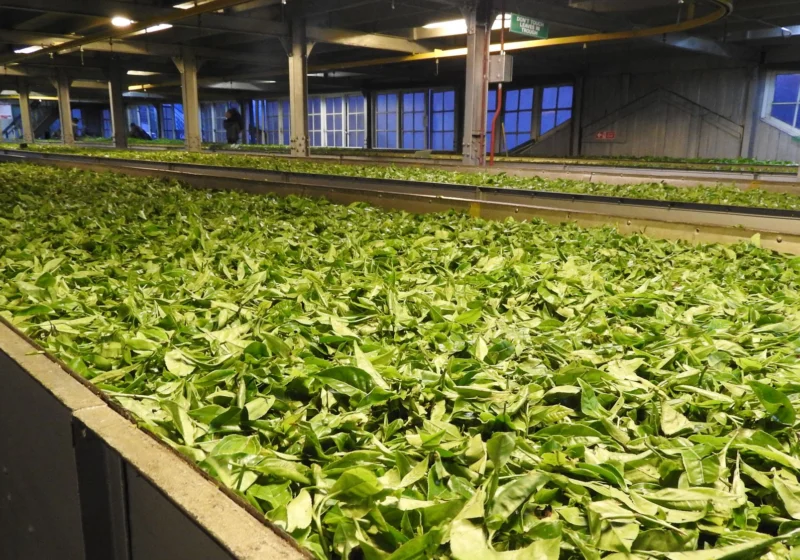
Embilmegama sits within the broader Kandy growing district, a mid-elevation belt in Sri Lanka’s hill country generally associated with fuller, rounder character than the lighter, more floral teas typical of higher districts like Nuwara Eliya. Within that broader Kandyan character, Embilmegama’s own factory practices, how its leaf is withered, rolled and oxidised, are what push its particular output toward brightness and clarity rather than the deeper, heavier profile you’ll find from some neighbouring factories. We should be honest about the limits of what we can say with certainty here: we know the cup consistently tastes this way, and we know the general processing factors that produce brightness in black tea generally, theaflavins forming early and in good proportion during oxidation, but we haven’t independently audited Embilmegama’s internal processing records down to the exact minute of each stage, so we’re describing the character we taste and the general chemistry that typically produces it, not claiming inside knowledge of their precise production schedule.
A specific corner of the Kandy district
Embilmegama is a small hillside community in the Yatinuwara area of the Kandy district, sitting at roughly 500 to 550 metres above sea level and only a short drive from Kandy town itself. That elevation places it firmly in the mid-grown band of Sri Lanka’s tea country, below the misty, cooler estates of Nuwara Eliya or Uva higher up in the hills, but well above the warm, low-grown districts near the south coast. Mid elevation like this tends to produce tea with more presence and body than the most delicate high-grown leaf, while still keeping some of the brightness that very low, warm-climate growing conditions can blunt, which fits the character we taste from Embilmegama specifically.
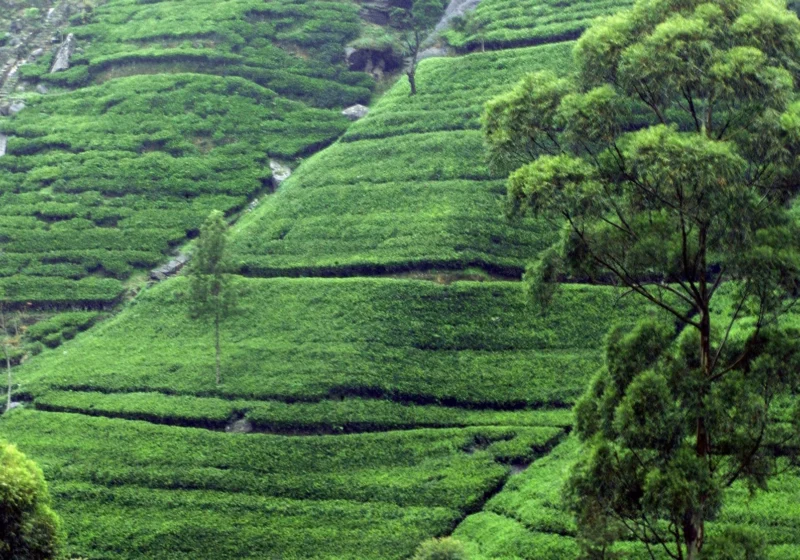
The surrounding countryside is characteristically Kandyan: steep, terraced hillsides, small home gardens mixed in among the tea rows, and a patchwork of smallholdings alongside larger estate blocks rather than one single uninterrupted plantation. This mixed landscape is typical of the Kandy growing district more broadly, and it’s part of why Kandyan tea, as a category, tends to show more variation estate to estate than the more uniform high-grown districts further up the hills.
The role Embilmegama plays in our Signature Blend
| Estate | Core character | What it contributes to the blend |
|---|---|---|
| Embilmegama | Brisk, bright, clean | Lift and clarity; keeps the blend from feeling heavy |
| Pilimathalawa | Strong, full-bodied | Weight, depth and a coppery colour |
| Arabegama | Rounded, sweet | A smooth, lingering finish |
Without Embilmegama’s contribution, the Signature Blend would lean noticeably heavier and more one-note, since Pilimathalawa’s strength and Arabegama’s sweetness, without something to lift them, tend toward a rounder but somewhat flatter overall impression. As a single-estate tea on its own, Embilmegama shows that brisk, clean character at its purest and most direct, without anything else layered in to soften or deepen it.
| Quality | Embilmegama | Pilimathalawa | Arabegama |
|---|---|---|---|
| Liquor colour | Bright, clear coppery-orange | Deep, full copper | Warm amber-copper |
| Body | Light to medium | Full, substantial | Medium, rounded |
| Best taken | Plain, to taste the lift | With milk, for strength | Either, mellow throughout |
How to brew it to get the most from it
- Use about 2.5 g of leaf, one heaped teaspoon, per 250 ml cup, the standard measure for a broken-grade Ceylon black tea.
- Pour water at or near a full rolling boil, around 95-100°C, since Embilmegama’s character comes through most clearly with proper extraction.
- Steep for three to four minutes, then taste; its briskness is noticeable even at the shorter end of this range.
- Try it plain first, before adding milk, since brightness and clarity are exactly the qualities milk is most likely to mute.
A pairing worth trying
Brisk, bright teas like Embilmegama cut nicely through rich, buttery food. A slice of butter cake or a warm, ghee-brushed roti makes a genuinely good pairing, since the tea’s clean finish keeps resetting the palate between bites rather than letting the richness build up unchecked.
Single estate versus blend: tasting the difference
If you want to understand what any one estate actually contributes to a blend, the most direct way is to taste it both ways: once on its own, and once as part of the finished blend, ideally side by side rather than days apart, since memory for taste fades fast. Tasted alone, Embilmegama’s brightness is unmistakable and a little more one-dimensional, lively and clean but without much depth sitting underneath it. In the Signature Blend, that same brightness is still clearly present, but it now sits on top of Pilimathalawa’s body and alongside Arabegama’s sweetness, so it reads less as the whole character of the cup and more as the lift at the top of it. Neither version is strictly better; they’re simply different ways of experiencing the same leaf, and trying both is genuinely the best way to taste what blending adds that a single estate alone cannot provide on its own.
What we don’t know, and why we say so
We want to be upfront about the limits of this profile. We can tell you with confidence how Embilmegama’s tea tastes, cupped and tasted repeatedly by us, and we can tell you the general elevation and district it sits within, since that’s a matter of geography rather than anything proprietary. What we can’t offer is a certified single-estate origin audit of the kind some specialty tea sellers provide for individual, named gardens, with batch numbers and harvest dates tied to a specific plucking round. For a blended-tea brand like Udarata, sourcing from three named Kandyan factories rather than a single boutique garden, that level of per-batch documentation isn’t part of how we currently work, and we’d rather say that plainly than imply a level of traceability we don’t actually provide today.
Why we chose to name the estate at all
It would be simpler, from a branding standpoint, to just call this ‘bright Kandyan black tea’ and leave it there. We named Embilmegama specifically, alongside Pilimathalawa and Arabegama, because we think the character you’re tasting is more interesting, and more trustworthy, when it’s tied to an actual, specific place rather than a vague regional label. If you’d like to taste Embilmegama’s brightness directly, try it on its own before trying the Signature Blend, so you know exactly which part of the blend’s character is coming from this particular hillside.
The practical side: plucking rounds and leaf supply
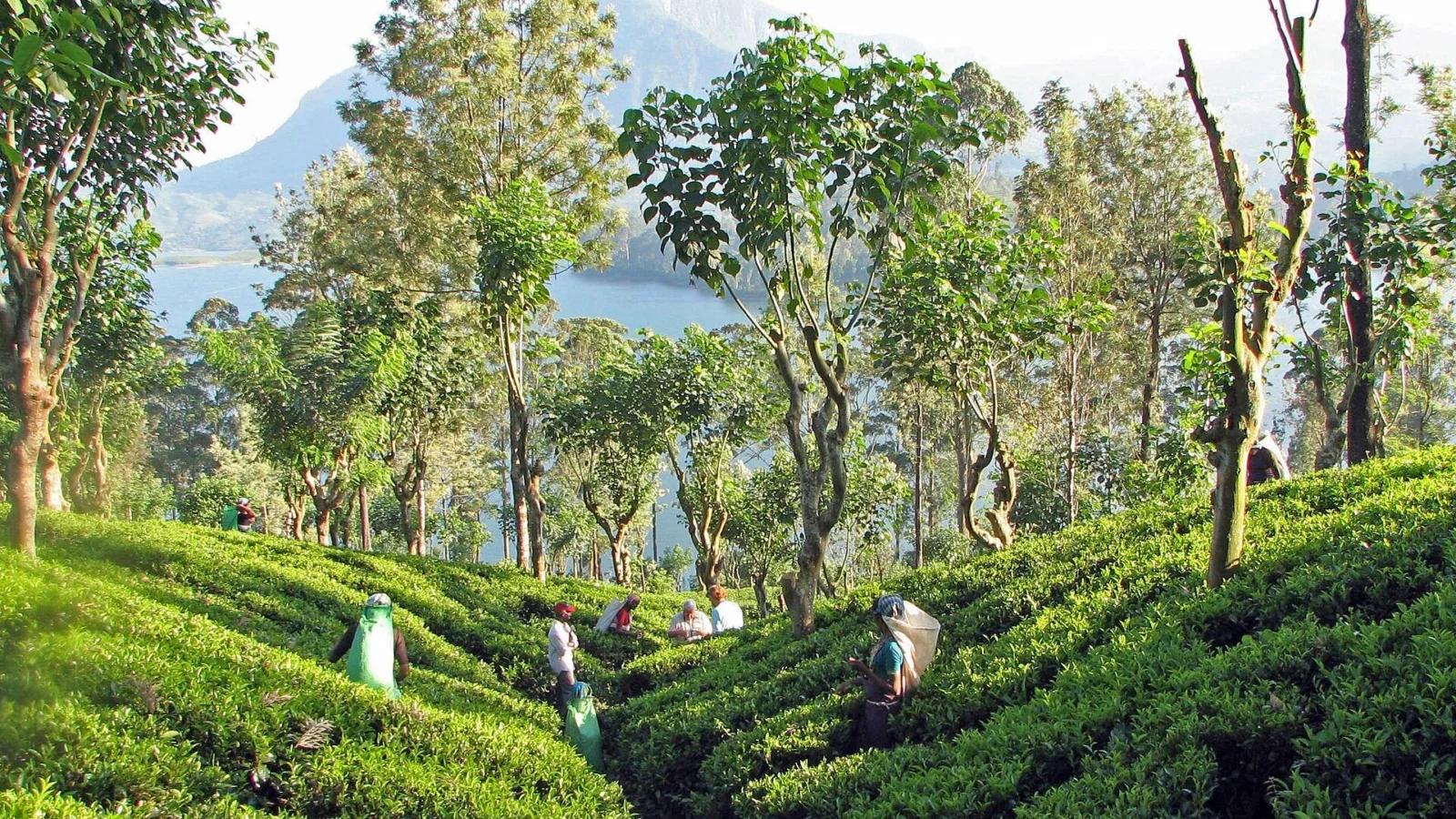
Like other Kandyan gardens, the tea bushes around Embilmegama are plucked on a rolling cycle rather than harvested once a season, new growth, the tender two-leaves-and-a-bud flush, is ready to pluck again roughly every seven to fourteen days depending on weather and growing conditions, which is why tea cultivation looks less like a single annual harvest and more like a continuous, year-round rhythm of small, repeated pickings. Rain and temperature both affect how quickly new flush comes in, so the exact pace varies through the year, but the basic pattern of frequent, light plucking rounds rather than one big harvest is standard across the Kandy district and across Sri Lankan tea generally.
This matters for consistency in a subtle way: because leaf arrives at the factory in a steady trickle of plucking rounds rather than one seasonal glut, a well-run Kandyan factory like Embilmegama has the chance to process each day’s leaf relatively promptly, which helps keep quality even from batch to batch rather than swinging with the volume of any single harvest day. It’s a less dramatic story than a single dramatic harvest season, but it’s closer to how tea actually gets to your cup.