
Black tea keeps far better than most fresh food, but it is not indestructible. Stored carelessly on a sunny windowsill in an open bag, even an excellent tea can lose much of its aroma within a matter of weeks. Stored thoughtfully, the same tea can stay genuinely enjoyable for the better part of a year. The difference comes down to understanding what actually damages tea, because once you know that, good storage stops being a list of rules to memorise and becomes mostly common sense.
The five things that age tea
- Air — oxygen reacts slowly with the compounds in tea even after processing is finished, gradually dulling the bright, fresh notes. An airtight container slows this considerably.
- Light, especially direct sunlight, breaks down some of the delicate aromatic compounds through photochemical reactions, which is why tea sold in clear glass jars fades faster than tea in opaque tins.
- Heat speeds up every chemical reaction happening in the leaf, including the slow oxidative staling that air causes, so tea stored near a stove or in a warm cupboard ages noticeably faster than tea kept somewhere cool.
- Moisture is the fastest-acting enemy of all. Tea leaf is dried to roughly 2 to 4 percent residual moisture during processing; even a small amount of extra humidity can encourage mould and will certainly flatten the flavour within days.
- Strong odours are absorbed readily by dry tea leaf, which is porous and acts almost like a sponge for airborne aromatic compounds. Tea stored near spices, coffee or cleaning products will pick up those smells, sometimes within a day or two.
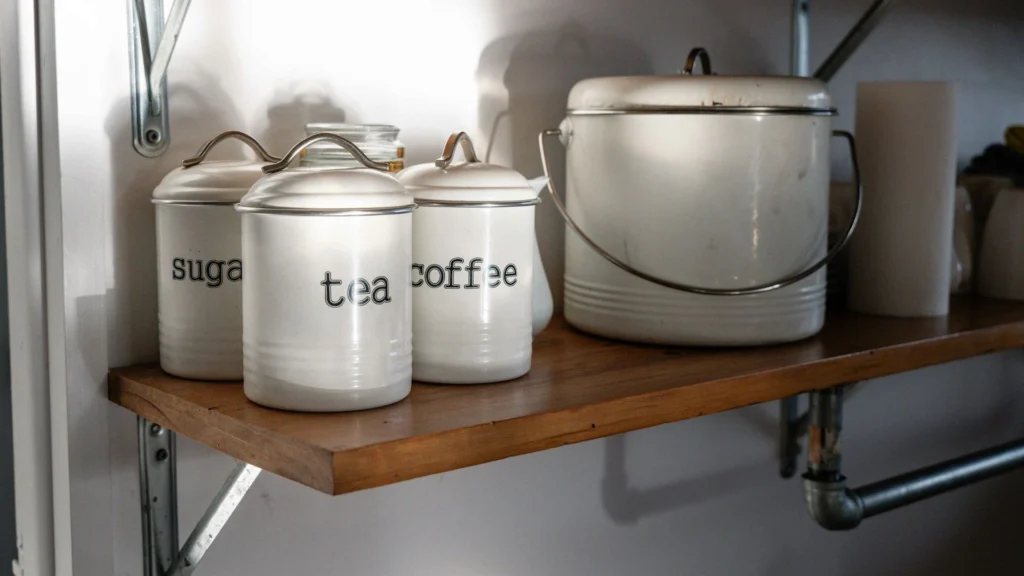
Why an airtight tin solves most of these problems at once
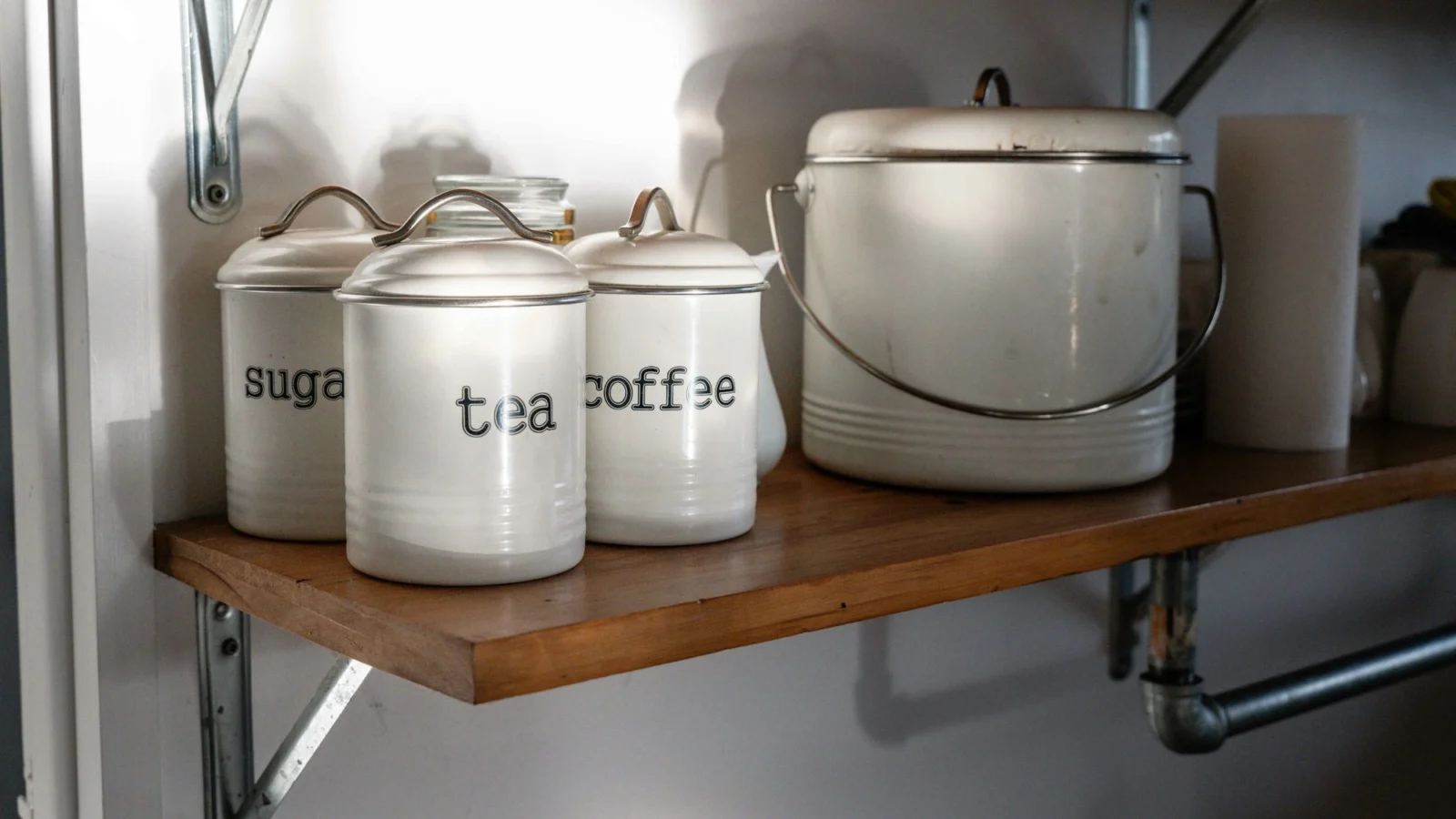
A good-quality, opaque, airtight tin or canister addresses four of the five enemies in one simple step: it blocks light entirely, it slows the exchange of air (and therefore oxygen) dramatically compared with an open bag or a loosely folded packet, it keeps external moisture out, and a sealed container is far less likely to pick up smells from a nearby spice rack. Only heat is left to manage separately, and that simply means choosing a cool spot: a cupboard away from the stove, oven or a sunny window, rather than refrigeration.
Don’t put tea in the fridge
It’s a common instinct to think cold equals fresh, but a refrigerator is a humid environment and opening the door repeatedly causes condensation to form on anything stored inside, including tea tins. That moisture is far more damaging to tea than the mild warmth of a kitchen cupboard ever would be. Keep tea in a cool, dry cupboard instead.
Roughly how long tea actually lasts
| Storage situation | Approximate freshness window |
|---|---|
| Unopened pack, factory-sealed | 12-24 months |
| Opened pack, airtight tin, cool and dark | 6-9 months |
| Opened pack, loosely closed bag | 2-3 months |
| Open bowl or jar exposed to light and air | 2-4 weeks before noticeably flat |
Buy what you will actually drink
A smaller pack that gets finished within a couple of months will almost always taste better over its lifetime than a large pack that sits half-full for the better part of a year, however carefully it’s stored. If you drink tea regularly and go through a pack quickly, buying in bulk makes sense. If a tin tends to linger in the cupboard, buying smaller amounts more often is the better habit, even if it costs a little more per gram.
A simple freshness test
Open the tin and smell the dry leaf before you brew. Fresh, well-stored tea smells lively, fragrant and distinct, often with a hint of the character you’d expect in the cup. If it smells flat, dusty, or close to nothing at all, the tea has lost much of its aromatic character, though it is not unsafe to drink. Tea that has gone past its best for a quiet afternoon cup can still work well for iced tea, where ice and lemon or mint cover for some of the lost nuance, or for cooking, where its tannin and colour still have plenty to offer even without peak aroma.
- 2-4%typical moisture content of properly dried tea leaf
- 6-9 monthsrealistic freshness window for an opened tin stored well
- 5main enemies: air, light, heat, moisture, odours
What’s happening chemically as tea ages
Tea staling is not a single event but a slow drift. The volatile aromatic compounds responsible for a fresh tea’s lively, complex nose are, by their nature, the ones most prone to evaporating or oxidising away over time, since volatility and chemical reactivity tend to go together. As these fade, what remains is mostly the more stable compounds, tannins, pigments, and the base body of the tea, which is why stale tea tends to taste duller and flatter rather than simply weaker; the components that gave it brightness and aroma are what disappear first, while the heavier, less interesting components linger longest. This is also why reviving genuinely stale tea with a longer steep rarely works well: there’s little fresh aroma left to extract, however long you leave it.
Choosing the right container
| Container type | Blocks light? | Airtight? | Verdict |
|---|---|---|---|
| Opaque metal tin with a tight lid | Yes | Usually yes | Excellent, widely used by estates and shops |
| Dark glass jar with a sealing lid | Yes, if truly dark glass | Yes, if lid seals well | Good, and lets you see the leaf without opening |
| Clear glass jar | No | Can be, but light exposure undoes the benefit | Attractive for display, poor for actual storage |
| Original foil-lined pack, resealed | Yes | Depends on closure quality | Fine short-term; a proper tin is better long-term |
| Open bowl or loosely folded paper bag | No | No | Avoid for anything you want to keep more than a few days |
A storage routine worth adopting
In practice, good tea storage is simple enough to become a habit rather than a chore: keep tea in an opaque, airtight tin; keep that tin in a cool cupboard away from the stove and away from spices or coffee; use a dry spoon every time; and try to work through an opened pack within a few months rather than letting it sit indefinitely. None of this requires special equipment or much thought once it becomes routine, and the payoff, a consistently fresher cup, is one of the easiest upgrades available to anyone who already has good tea in the house.
Can I freeze tea to make it last longer?
It’s possible, but it’s rarely worth the trouble for black tea, which already keeps well under good ordinary storage. Freezing introduces its own risk: condensation forming on the leaf as it thaws, which is exactly the moisture damage good storage is meant to prevent. A proper airtight tin in a cool cupboard is simpler and just as effective for most households.
Is tea ever truly “expired” in a way that makes it unsafe?
Properly dried black tea, kept reasonably dry, does not spoil in the way fresh food does, since there is very little moisture available to support mould growth. It can become stale and unpleasant tasting well before it becomes unsafe. If a tin has been exposed to real moisture and smells musty or shows any visible mould, it should be discarded, but ordinary staling from age or light exposure is a flavour issue, not a safety one.
Travelling with tea, and other common edge cases
If you’re taking tea on a trip, a small resealable tin or a well-sealed foil pouch works fine for a few weeks away, even without perfect climate control, since short-term exposure does far less damage than months of it. The bigger risk while travelling is usually moisture: a damp hotel bathroom shelf or a bag that got rained on can do more harm in a day than a sunny windowsill would do in a week. For long-term storage at home, buying tea in the smaller pack sizes that match how quickly your household actually drinks it will usually do more for freshness than any clever storage trick, simply because less of the tea sits around ageing at any given time.
Does the tea’s own grade affect how it ages?
To a modest extent, yes. Finer grades such as BOPF and dust, with their larger surface area relative to mass, tend to lose their fresher top notes a little faster than whole-leaf grades like OP, simply because more of the leaf’s interior is exposed to air at any given time. In practice this difference is small compared with the effect of good or bad storage, so it’s not a reason to avoid finer grades, just a small extra incentive to be a bit more diligent about airtight storage if that’s what you usually drink.