
Few questions about something as simple as a cup of tea manage to start as many arguments as this one: does the milk go in before the tea, or after? Entire households have strong, long-held opinions. The debate even reached English literature, by way of a famously opinionated essay. The good news is that the question has a genuinely interesting answer, part history, part chemistry, and part straightforward personal preference.
The case for milk first
The milk-first tradition has a practical origin story. Fine porcelain, which was expensive and prone to cracking from thermal shock in the eighteenth and nineteenth centuries, was protected by pouring in cool milk before the hot tea, so the sudden heat hit the milk rather than the bare porcelain. Sturdier modern cups and mugs don’t have this problem, but the habit stuck in many households regardless, partly because some people genuinely prefer the way the flavour comes together when tea meets milk already waiting in the cup, describing it as smoother or creamier, rather than milk being added to tea that’s already fully brewed.
The case for tea first
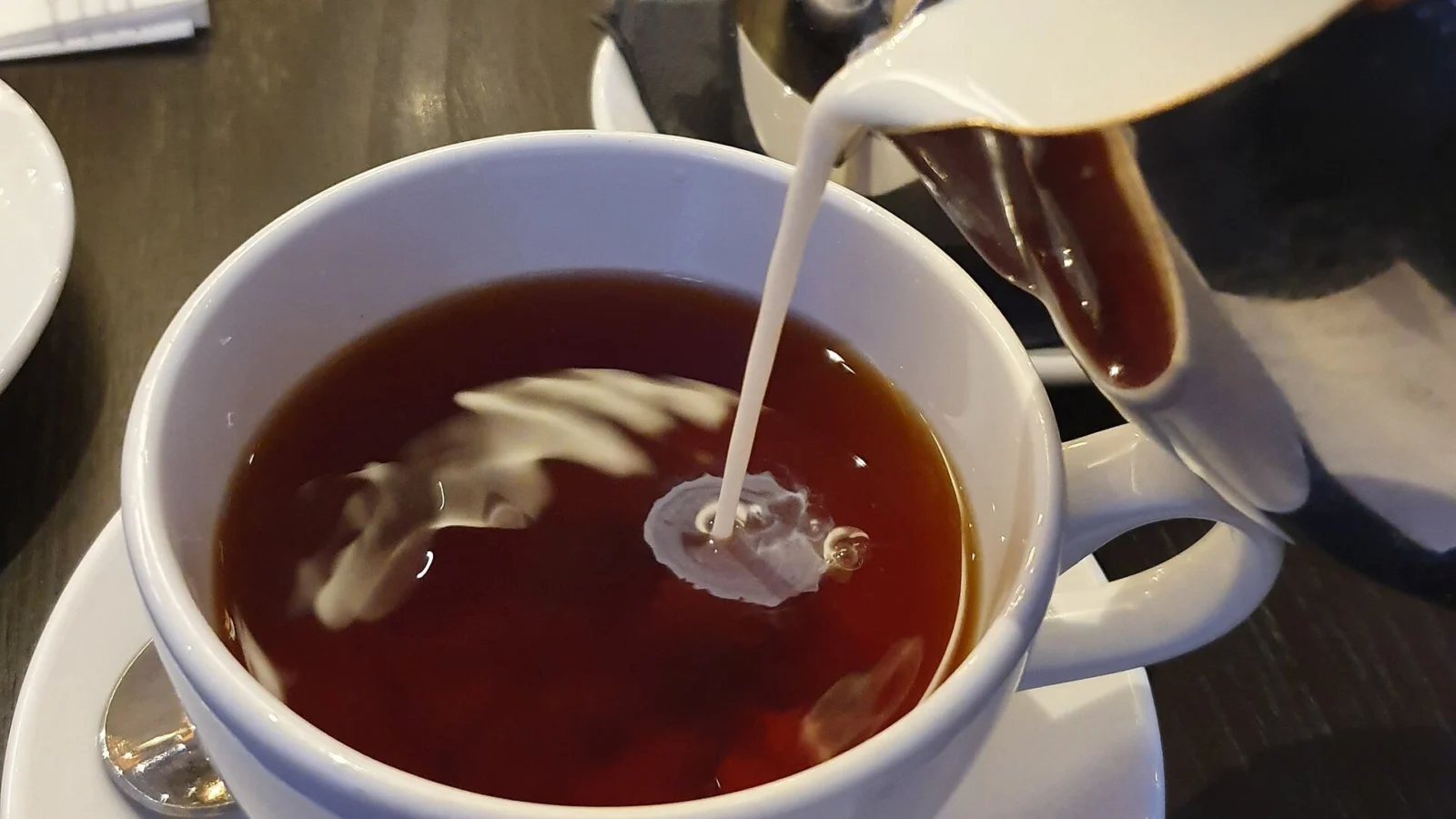
The tea-first camp has the practical advantage: pour the tea in first and you can add milk gradually, watching the colour change, until the strength and creaminess are exactly where you want them. This camp also has a famous champion. George Orwell, in his 1946 essay “A Nice Cup of Tea,” argued forcefully that tea should always be poured first, specifically so that the drinker retains full control over how much milk goes in, rather than committing to an amount before tasting anything.
What the chemistry actually says
There is a genuine chemical interaction between milk and tea worth understanding here, separate from the pouring-order tradition. Milk proteins, principally casein, bind to the polyphenols in tea, including catechins, which are among the compounds responsible for tea’s astringency and some of its reported health-related properties. This binding is well documented in peer-reviewed research and it does measurably reduce how available some of those polyphenols are to the body after drinking. What the pouring order does not meaningfully change is how much of this binding happens, since the two liquids end up thoroughly mixed either way by the time you drink the cup. In other words, the chemistry is real, but it’s a milk-and-tea story, not specifically a which-goes-in-first story.
What this does and doesn’t mean for your daily cup
The milk-polyphenol interaction is a genuine, measurable chemical reaction, not a myth. But it does not mean milk tea is somehow bad for you or empty of benefit; it simply means some specific compounds are less available for the body to absorb compared with black tea taken without milk. For most people enjoying tea as part of a normal diet, this is an interesting detail rather than a reason to change a habit they enjoy.
The Sri Lankan way settles the argument differently
In Sri Lanka, the pouring-order debate barely registers, because kiri tea, milk tea, is traditionally made by a different method altogether. Strong black tea is brewed first, then hot milk and sugar, or jaggery for a more traditional sweetness, are added, and the whole mixture is poured back and forth between two vessels, sometimes from a height, to aerate it until it develops a light froth on top. This “pulling” technique, familiar from roadside tea shops and railway platform vendors across the island, produces a smoother, more integrated cup regardless of which liquid technically touched the cup first, because by the time it’s served, everything has been thoroughly combined and aerated together.
| Style | Method | Where it’s common |
|---|---|---|
| British milk-first | Cool milk poured into cup, then hot tea added | Traditional British households |
| British tea-first (Orwell’s method) | Hot tea poured first, milk added gradually to taste | Widely practised; favoured by tea purists |
| Sri Lankan kiri tea | Strong tea and hot milk combined, then aerated by pouring between vessels | Sri Lanka, roadside tea shops (kade) |
Why strong tea matters more for a milk cup than people realise
Whichever order you prefer, one thing is non-negotiable if you want a genuinely good milk tea: the tea itself has to be brewed strong enough to still have character once milk is added. Milk doesn’t just lighten the colour, it also mutes some of the tea’s flavour and aroma, both through simple dilution and through the polyphenol binding described above. A tea that was only middling to begin with will taste thin and milky rather than rich once milk goes in. This is exactly why Sri Lankan kiri tea leans on fuller-bodied, often broken-grade Kandyan-style teas rather than delicate, lighter high-grown teas, which are generally better suited to drinking plain.
A short history of the debate’s most famous champion
Orwell’s 1946 essay laid out eleven rules for making what he considered a proper cup of tea, most of them now largely forgotten, but the milk-last rule is the one that has endured in popular memory, partly because he argued it with such conviction. His reasoning was practical rather than aesthetic: by pouring tea first, “one can exactly regulate the amount of milk,” whereas pouring milk first risks either too much or too little, with no way to correct it afterwards short of starting again. It’s worth noting that Orwell was writing about British-style tea with a modest splash of milk, not about Sri Lankan kiri tea, where the proportions and method are different enough that his rule doesn’t map directly onto it anyway.
A cultural debate, not just a chemical one
It’s worth stepping back and noticing that this entire debate persists not because the chemistry demands a particular order, since as covered above, it largely doesn’t, but because tea-making is deeply tied to family habit, regional identity and a certain amount of friendly stubbornness passed down through generations. Someone who grew up watching a parent or grandparent always pour milk first will likely find tea-first oddly unsettling the first few times they try it, and vice versa, regardless of what any article about chemistry has to say on the matter. That’s a perfectly good reason to keep doing it the way you learned, and arguably a better reason than any scientific one.
Does the type of milk make a difference?
It can, though mostly in texture and sweetness rather than in the underlying chemistry described above. Whole milk gives the richest, creamiest result and is the traditional choice for both British and Sri Lankan milk tea. Lower-fat milk gives a lighter mouthfeel without changing the polyphenol-binding effect much, since that interaction involves milk proteins rather than milk fat. Plant-based milk alternatives vary considerably: some, particularly oat and soy milk, blend reasonably well with strong black tea, while others can curdle slightly or separate when combined with hot, acidic tea, which is worth testing with a small amount before committing a full cup to an unfamiliar milk.
Trying kiri tea at home
If you’d like to try the Sri Lankan method rather than simply adding milk to a British-style cup, brew a strong Ceylon tea, somewhat stronger than you’d normally drink it plain, since it will be diluted by the milk. Heat milk separately until hot but not boiling, add sugar or grated jaggery to taste, then combine the two and pour the mixture back and forth between two cups or jugs several times from a modest height. You’ll see it lighten slightly in colour and develop a thin layer of froth on top, a sign it’s been properly aerated. This technique takes a little practice to do neatly, but it’s genuinely satisfying once you get the hang of it, and it sidesteps the whole milk-first-or-tea-first question by combining both elements deliberately rather than simply pouring one into the other.
Our advice, for what it’s worth
Brew the tea properly first, giving it the full three to five minutes a good Ceylon black tea deserves, so you actually know how strong it is. After that, whether you add milk to the cup or the cup to the milk is genuinely a matter of personal preference and household tradition, and we’re not going to pretend there’s a single correct answer. What does matter, far more than pouring order, is starting with tea that was brewed with care, and strong enough, in the first place. Everything after that is just how you like to finish it.