
Pilimathalawa lies on the main road into Kandy, in the heart of the Kandyan hills, and it’s home to Udarata Tea itself. It’s also one of the three factories whose teas we taste, source and blend, and the one that gives our Signature Blend its backbone.
If you’ve read our other two estate profiles, you’ll know we try to be specific rather than vague about what each named factory actually contributes, and Pilimathalawa is, in a sense, the easiest of the three to describe honestly, because the word people reach for first, almost without exception, is simply strong. Not harsh, not overpowering, but substantial in a way that’s immediately obvious even to someone who doesn’t usually think closely about how their tea tastes, the kind of cup you notice from the very first sip rather than one that reveals itself slowly.
A town with its own place in the hills
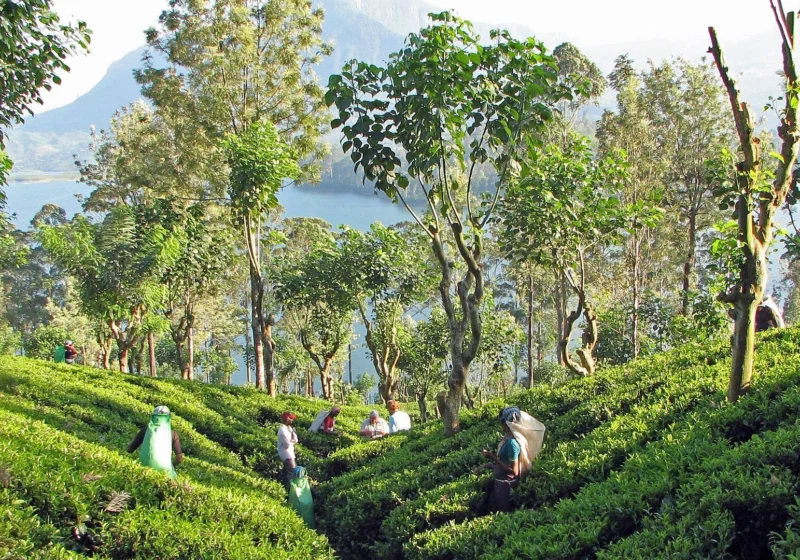
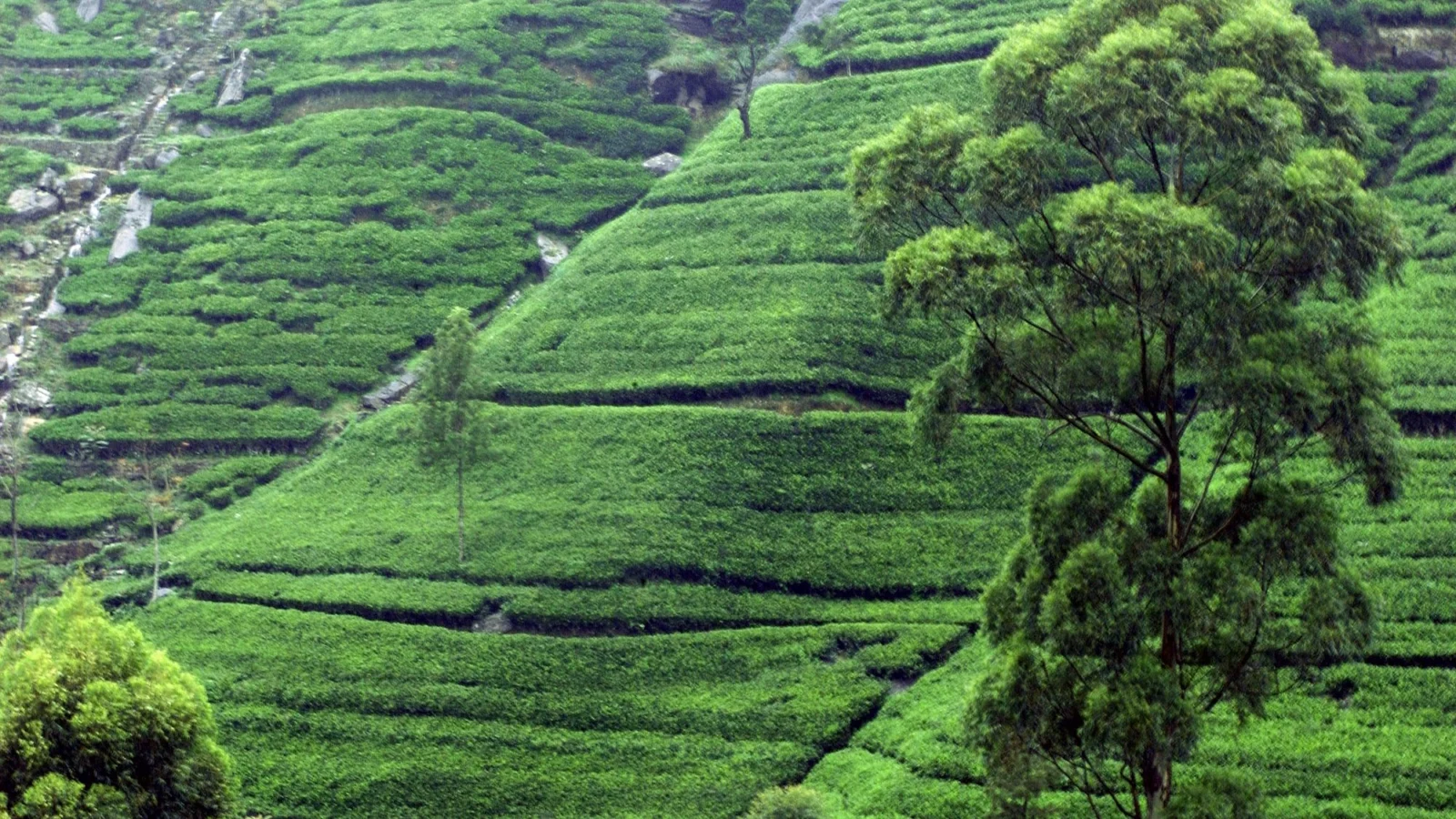
Pilimathalawa sits a little over 10 km from Kandy along the main A1 highway, close enough that it functions almost as a satellite of the city while retaining its own distinct identity as a town in the Kandy district. It’s also only a short distance from the Royal Botanic Gardens at Peradeniya, one of the island’s most visited heritage sites, which puts Pilimathalawa in good company geographically, bordered by history on one side and tea country stretching into the hills on the other. The surrounding land sits at a mid-elevation typical of the broader Kandy growing district, generally in the few-hundred-metre range rather than the higher, cooler elevations found further up toward Nuwara Eliya or Uva further into the hills.
Classic Kandyan strength, explained
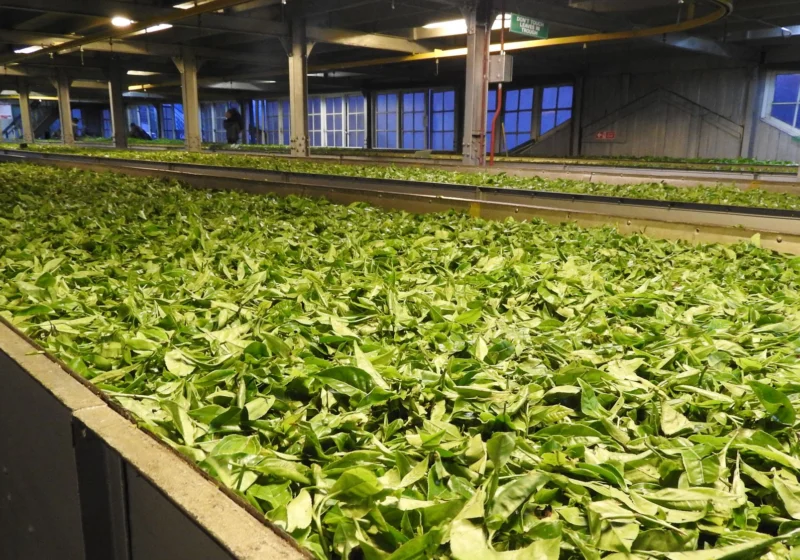
If Embilmegama is bright and brisk, Pilimathalawa is deep and full. Its teas carry the body and coppery colour that people have long associated with a true Kandy cup, strong enough to stand up comfortably to milk and sugar or jaggery, yet smooth enough to drink plain without harshness. In the general chemistry of black tea processing, this fuller, deeper character is typically associated with a fuller oxidation and a correspondingly higher proportion of thearubigins, the darker, body-building compounds that accumulate the longer oxidation is allowed to run, relative to the brighter, more fleeting theaflavins. We describe this as the general pattern that tends to produce a cup like Pilimathalawa’s, not as an audited account of their exact internal processing times, which we haven’t independently verified minute by minute.
To put some rough numbers around that general chemistry: published studies of orthodox black tea manufacture typically describe an oxidation stage lasting somewhere in the range of two to four hours, run at a controlled, humid temperature around 24-29°C, with shorter times used during peak quality season and longer times during slower, off-season conditions, before the firing stage halts the enzymes with heat. We cite that as the general range reported in processing literature for orthodox manufacture broadly, not as Pilimathalawa’s own disclosed internal timing, which we haven’t independently audited minute by minute.
The backbone of the blend
In the Signature Blend, Pilimathalawa provides structure, the body that holds the brightness of Embilmegama and the sweetness of Arabegama together rather than letting the blend feel thin or disjointed. Without this contribution, a blend of the other two estates alone would likely taste pleasant but somewhat insubstantial, lacking the weight that makes a cup feel satisfying rather than merely interesting. Think of it as the low, steady note underneath the other two: not the most noticeable element on first sip, but the one you’d miss immediately if it were taken away, since the whole blend would suddenly feel lighter and less grounded without it.
| Quality | What it means in the cup |
|---|---|
| Body | A full, substantial feel on the tongue, not just colour |
| Coppery colour | A sign of well-managed, fuller oxidation |
| Milk compatibility | Strong enough that milk doesn’t wash out the character |
| Smoothness | Low harsh astringency despite the strength |
Around Pilimathalawa: a historic corner of the hills
The area is genuinely rich in history beyond tea alone. Nearby stand three celebrated fourteenth-century temples, Gadaladeniya, Lankatilaka and Embekke, the last particularly famous for its intricately carved wooden pillars, each depicting different motifs from dancers to mythical creatures. All three predate the Kandyan Kingdom itself, built during the earlier Gampola period under King Bhuvanekabahu IV and King Vikramabahu III, which makes this small patch of countryside, now surrounded by tea smallholdings and home gardens, one of the oldest continuously significant religious landscapes in the hill country. A drive between the three, with a stop for tea along the way, makes one of the more rewarding half-days available in the Kandy district, combining architectural history with the same hill-country landscape that produces the tea itself.
- ~1344Gadaladeniya and Lankatilaka built, under the Gampola kingdom
- ~1357-74Embekke built, famed for carved wooden pillars
- ~10 kmdistance from Pilimathalawa into Kandy
If you’re planning a visit
Gadaladeniya, Lankatilaka and Embekke temples are all within a reasonably short drive of each other near Pilimathalawa, and visiting them in sequence is a popular half-day route for anyone exploring the Kandy area beyond the city centre itself. As with any heritage site, check current opening hours and any dress code requirements before visiting, and consider pairing the trip with a stop in Peradeniya, a short distance away, since the botanical gardens and the temple route sit comfortably within the same day.
How to brew it for the full character
Use freshly boiled water, at a full rolling boil, and steep for about four minutes, slightly on the longer side of the standard range, since Pilimathalawa’s fuller body benefits from the extra extraction time rather than being overwhelmed by it the way a more delicate tea might be. Add milk and a little sugar or jaggery for the classic Sri Lankan cup this tea seems almost purpose-built for, though it holds its own perfectly well taken plain if you’d rather taste the strength and colour directly.
| Variable | Suggested approach | Why |
|---|---|---|
| Water temperature | A full rolling boil, 95-100°C | Full extraction suits the fuller leaf body |
| Steeping time | 4 minutes | Slightly longer than a delicate high-grown tea needs |
| With milk | Add after steeping, to taste | Body holds up well; little character is lost |
| Second steep | Possible, shorter, lighter | Body carries through reasonably well on a second pour |
A tea built for the Sri Lankan milk-tea tradition
It’s worth being specific about why Pilimathalawa in particular suits kiri tea, Sri Lankan milk tea, so well. As covered in our piece on milk and tea chemistry, milk proteins bind to some of tea’s polyphenols and reduce their perceived intensity in the cup, which means a delicate, lighter tea can end up tasting washed out once milk is added. Pilimathalawa’s naturally fuller body and deeper colour give it enough character to survive that dilution and still taste like something distinct, which is really the whole reason ‘strong enough for milk’ is treated as a genuine compliment in the tea trade rather than a backhanded one.
Tasting Pilimathalawa against the other two estates
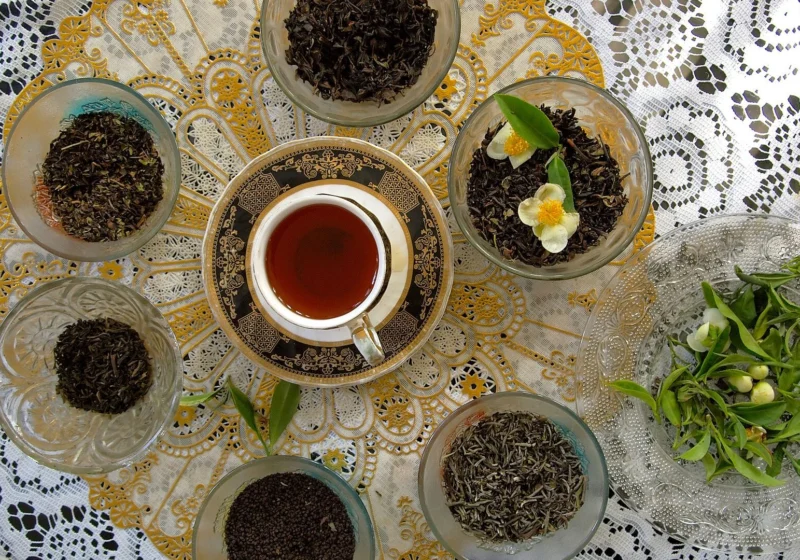
The clearest way to understand what Pilimathalawa specifically contributes is to taste all three single-estate teas side by side, Embilmegama, Pilimathalawa and Arabegama, brewed the same way at the same time. Embilmegama will taste noticeably lighter and sharper by comparison; Arabegama will taste rounder and sweeter, with less obvious bite; and Pilimathalawa will sit between them in a different sense entirely, not as a midpoint on the same scale but as the one with the most sheer presence in the mouth, the fullest body and the deepest colour of the three. Tasted this way, it becomes much easier to understand, by direct comparison rather than description alone, exactly what ‘backbone’ means when we use that word about a blend.
A tea that doesn’t need dressing up
Part of what we appreciate about Pilimathalawa is how little it needs. A naturally lighter, more delicate tea often benefits from being treated carefully, shorter steeps, cooler water, taken plain to protect its subtlety. Pilimathalawa isn’t a tea that asks for that kind of caution. It tolerates a full boil, a generous steep, a splash of milk and a spoon of sugar or jaggery without losing its identity, which is exactly the quality that has made full-bodied Kandyan tea the everyday, reliable cup for so many households for well over a century, not a delicate occasional treat but a tea built for daily use, strong enough to be poured again and again throughout a long day and still taste like itself at the bottom of the pot.