
It’s easy to think of water as the neutral, invisible part of making tea, just the vehicle that carries the real ingredient. In reality, a cup of brewed tea is well over 99 percent water, and that water is not a passive bystander. It dissolves and carries every compound responsible for colour, aroma and taste, and its own chemistry, mineral content, chlorine, even how many times it’s been boiled, measurably changes what ends up in the cup. The same quality leaf can taste bright and lively or flat and dull depending almost entirely on the water used to brew it.
Fresh, not reboiled
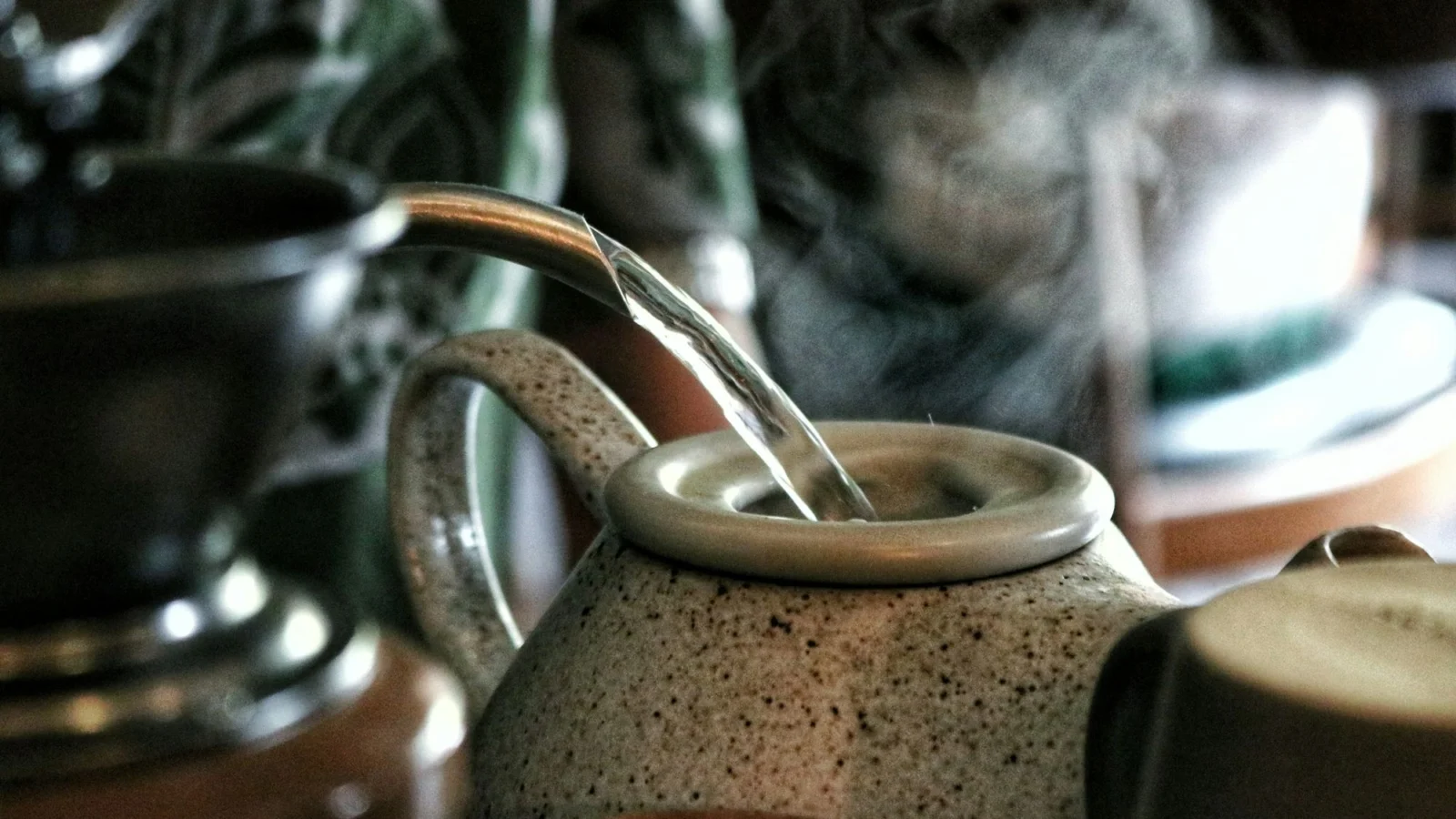
Always fill the kettle with water straight from the tap rather than topping up a kettle that’s been boiled once already and left to cool. Boiling drives dissolved oxygen out of water, and that oxygen matters for how lively a brewed tea tastes; water that has been boiled, cooled and reboiled several times has progressively less of it, which is part of why reused kettle water tends to produce a noticeably flatter cup even when every other variable is identical.
Hardness: when minerals work against the tea
Water hardness refers to the amount of dissolved calcium and magnesium it carries, and it has a real, visible effect on tea. Very hard water reacts with compounds in brewed tea and can leave a thin, pale film on the surface of the cup, sometimes called tea scum, which is harmless but is a clear sign the water isn’t working in the tea’s favour. Hard water can also mute some of the brighter, more delicate top notes in a good tea, leaving a duller, flatter impression even when the leaf itself is excellent.
What is ‘hard’ water, exactly?
Water hardness is usually measured in parts per million (ppm) of dissolved calcium carbonate, or in degrees depending on the country. Roughly speaking, under 60 ppm is considered soft, 60 to 180 ppm moderately hard, and above 180 ppm hard. Many municipal water suppliers publish this figure, so it’s worth checking yours if you’re curious why your tea tastes different from a friend’s in another city.
Chlorine and other treatment chemicals
Municipal water is routinely treated with chlorine or chloramine to keep it safe to drink, which is obviously a good thing for public health, but chlorine’s own faint smell and taste can mask some of tea’s more delicate aromatic notes, particularly in lighter, high-grown teas where aroma carries much of the character. A simple carbon filter jug removes most residual chlorine along with a good deal of dissolved mineral content, which is why filtered water is such a commonly recommended, low-effort upgrade for tea at home.
| Water source | Typical effect on tea | Worth trying if… |
|---|---|---|
| Ordinary tap water (moderate hardness) | Fine for most teas; slight dulling if hardness or chlorine is high | Your tea already tastes reasonably good |
| Filtered tap water (carbon filter jug) | Removes chlorine taste and some hardness; usually a clear improvement | Your tap water is noticeably chlorinated or hard |
| Bottled ‘spring’ water | Varies hugely by brand’s own mineral content; not automatically better | You want to experiment, but check the label’s mineral content first |
| Distilled or heavily purified water | Can taste surprisingly flat; too few minerals to carry flavour well | Rarely recommended for tea specifically |
Getting the temperature right
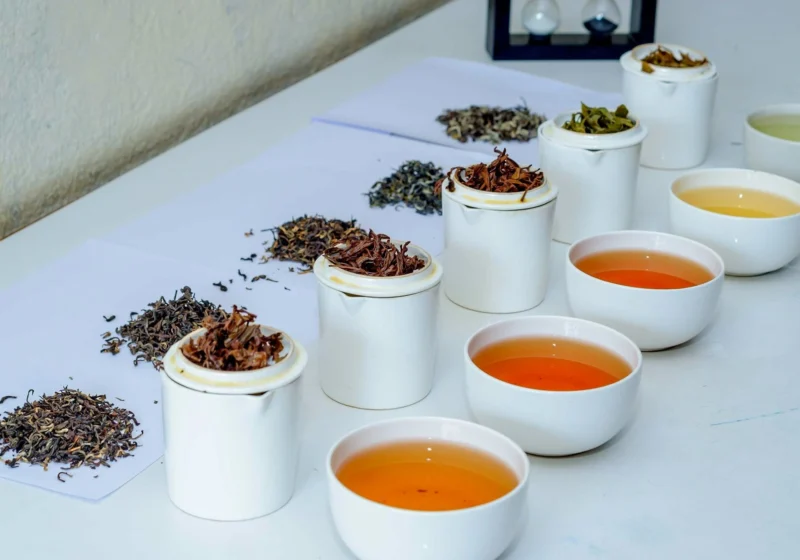
Different teas genuinely need different water temperatures, and this isn’t fussiness, it reflects how much processing and oxidation the leaf has already been through. Black tea, having been fully oxidised, can take a full rolling boil, 95 to 100°C, without any harshness, and in fact needs that heat to extract its flavour efficiently. Green and white teas, which keep more of their original, more delicate raw-leaf compounds, are more easily scalded into bitterness by water that’s too hot, so they’re traditionally brewed cooler, with the kettle allowed to rest for a few minutes after boiling.
| Tea type | Suggested water temperature | Why |
|---|---|---|
| Black tea (Ceylon and most others) | 95-100°C, a full rolling boil | Fully oxidised already; needs heat to extract efficiently |
| Oolong tea | 85-95°C | Partially oxidised; benefits from slightly less than a full boil |
| Green tea | 75-80°C | Delicate, less-oxidised leaf scalds easily at full boil |
| White tea | 80-85°C | Very delicate, minimally processed buds and young leaf |
A simple habit that fixes most water problems
If you only make one change based on everything above, make it this: use freshly drawn water, brought to the right temperature once, rather than reused or repeatedly reboiled water. This single habit addresses the oxygen-loss problem directly and, for most households with reasonably ordinary tap water, gets you most of the way to a noticeably better cup without buying anything or changing your tea at all. If your tap water is known to be particularly hard or heavily chlorinated, a basic filter jug is the next, equally simple upgrade worth trying.
A simple test you can do with your own tap water
You don’t need a lab to get a rough sense of whether your water is working for or against your tea. Brew the same tea two ways: once with your ordinary tap water, and once with the same tea using filtered or bottled water of modest mineral content, keeping the leaf amount, temperature and steeping time identical both times. Taste them side by side rather than on separate days, when memory of the first cup fades. If the filtered version tastes noticeably brighter or cleaner, that’s a reasonably strong sign your tap water’s hardness or chlorine level is holding your usual cup back from its best.
It’s also worth paying attention to how your kettle itself behaves over time. Hard water leaves behind limescale, a visible white or chalky crust inside kettles and on heating elements, and a kettle with heavy limescale buildup can both heat water unevenly and, in some cases, impart a faint off-taste of its own. Descaling a kettle periodically, with a simple vinegar-and-water soak or a shop-bought descaling solution, is a cheap, easy habit that keeps the appliance itself from becoming part of the water problem.
Why this matters more for black tea with milk, not less
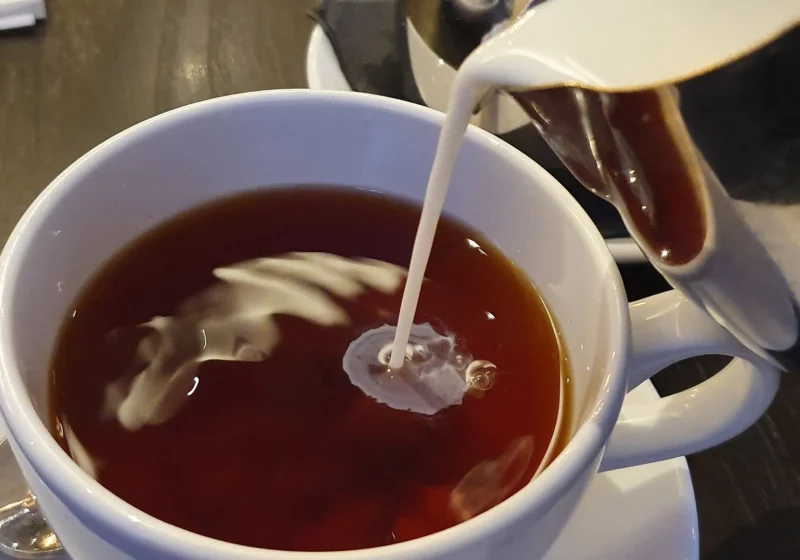
It’s a common assumption that once milk goes into the cup, water quality stops mattering much, since milk’s own flavour will dominate anyway. In practice the opposite is often closer to true: a flat, over-hard or heavily chlorinated base tea has less character left to come through once it’s diluted by milk, so a milk tea made from poorly brewed tea tends to taste thin and uninteresting rather than rich. If you drink most of your tea with milk, as many Sri Lankan households do, getting the water and the base brew right arguably matters even more, not less, because there’s less room afterward to compensate for a weak foundation.
Does bottled water actually help?
Sometimes, but not automatically, and it’s worth checking rather than assuming. Bottled waters vary enormously in their own mineral content: some are nearly as soft as filtered tap water, while others, particularly some mineral waters marketed on their high mineral content, can be harder than typical tap water and would work against a delicate tea just as much as hard tap water would. If you want to experiment with bottled water, look at the label for total dissolved solids or mineral content, and favour something on the softer, lower-mineral side rather than assuming any bottled water is automatically an upgrade.
What about using water straight from a kettle with a built-in filter?
Kettles with built-in limescale filters, usually a small mesh screen near the spout, are designed to catch solid limescale particles that have already formed, not to soften the water chemically before you boil it. They’re useful for keeping flakes of scale out of your cup, which matters for texture and appearance, but they don’t meaningfully change hardness or chlorine content the way a dedicated carbon filter jug does. If your water genuinely tastes of chlorine or leaves a visible film, a proper filter jug upstream of the kettle will do far more than a built-in spout filter alone.
Travelling, and brewing tea away from home
If you’ve ever brewed the exact same tea at home and then again while travelling and been puzzled by how different it tasted, water is very often the explanation, more so than anything about the kettle, the cup, or even subtle differences in how carefully you measured the leaf. Different cities and regions can have dramatically different water hardness and treatment chemistry, and a tea that tastes bright and lively on your usual tap water might taste noticeably flatter or scummier somewhere with much harder water, through no fault of the tea itself. If you travel with a favourite tea and find it disappointing somewhere new, it’s worth trying bottled water of modest mineral content before concluding the tea has somehow changed.
Get the water right, and genuinely, every other part of brewing tea becomes easier. A good leaf brewed in flat, over-hard or heavily chlorinated water will always taste like a compromise, no matter how carefully you measure the leaf or time the steep. Water is the one ingredient in every single cup, and it deserves at least as much attention as the tea itself.