
Our name comes from the Sinhala word Udarata, meaning the up-country, the hill country. For centuries before it became famous for tea, this misty, mountainous heart of Sri Lanka was something else entirely: the territory of a kingdom, ruled from the city of Kandy, that outlasted every other local power on the island in the face of European colonisation.
The last independent kingdom
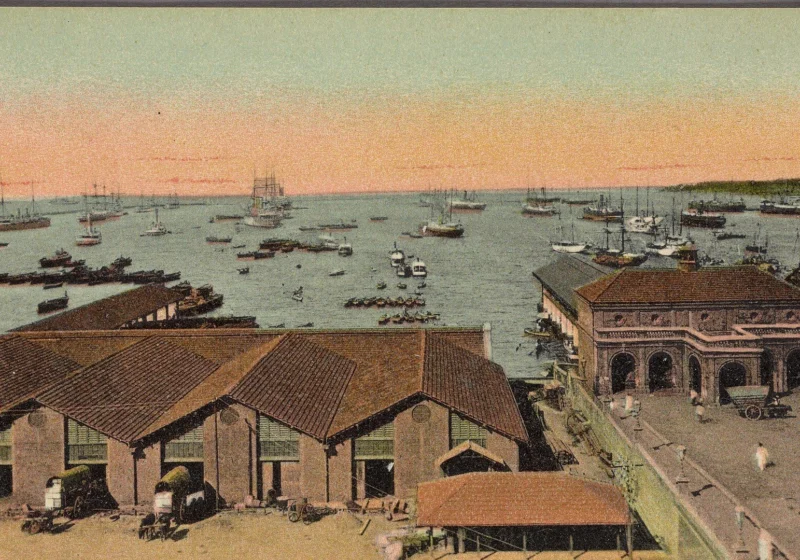
By the early 1600s, Portuguese traders and soldiers controlled much of Sri Lanka’s coastal lowlands, and the Dutch took over those same coastal holdings in the following century. The Kandyan Kingdom, protected by the hill country’s steep terrain, dense forest and difficult river crossings, held out against both powers, remaining independent while the coasts changed hands around it. This wasn’t simple isolation; Kandyan rulers actively used the geography to their advantage, drawing colonial forces into terrain that favoured defenders and made large-scale occupation of the interior genuinely difficult.
The same mountains, steep gradients and narrow passes that frustrated colonial armies are, not coincidentally, exactly the terrain that later proved so well suited to tea cultivation. The hill country’s defensibility and its suitability for growing tea both come from the same underlying geography, elevation, slope and a climate shaped by the surrounding peaks, which is a large part of why the plantation economy that followed the kingdom’s fall took root here specifically rather than spreading evenly across the whole island.
How the kingdom began
The Kingdom of Kandy traces its founding to 1469, when a prince named Senasammata Vikramabahu, originally sent to govern the hill country as a provincial ruler under the larger Kingdom of Kotte, broke away and declared the territory an independent kingdom, with himself as its first king. He is also credited with founding the city of Kandy itself as the kingdom’s capital. For roughly the next three and a half centuries, Kandy remained a separate Sinhalese kingdom, through periods of conflict and uneasy coexistence with the lowland Kingdom of Kotte and, later, with the Portuguese and Dutch powers that came to control the coast.
1815: the Kandyan Convention
The kingdom’s long independence finally ended in 1815, when it was ceded to the British under the Kandyan Convention, an agreement signed following a British military campaign and growing internal political instability within the kingdom itself. This was the moment that formally opened the hill country to British administration, and with it, eventually, to the plantation economy that would transform the landscape over the following decades.
- 1815the Kandyan Convention ends the kingdom’s independence
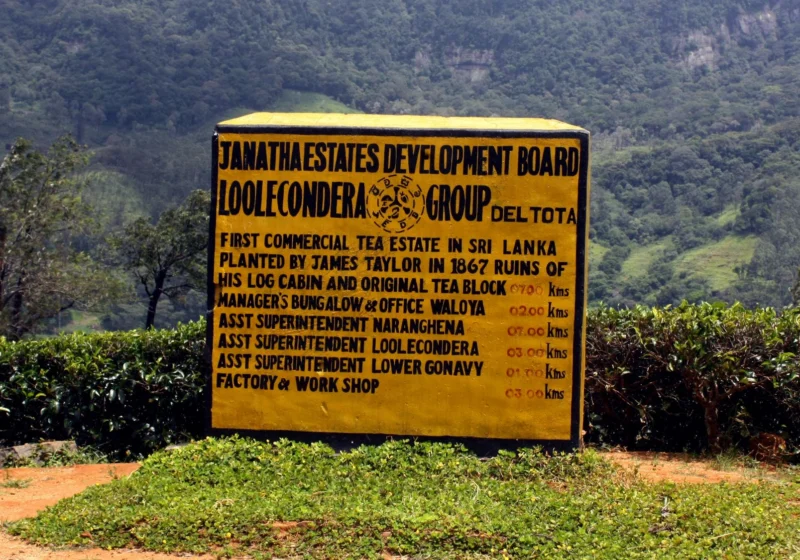
- 1867James Taylor plants the first commercial tea field nearby
- 150+years the hill country has now grown tea
Kandy: still the cultural heart of the hills
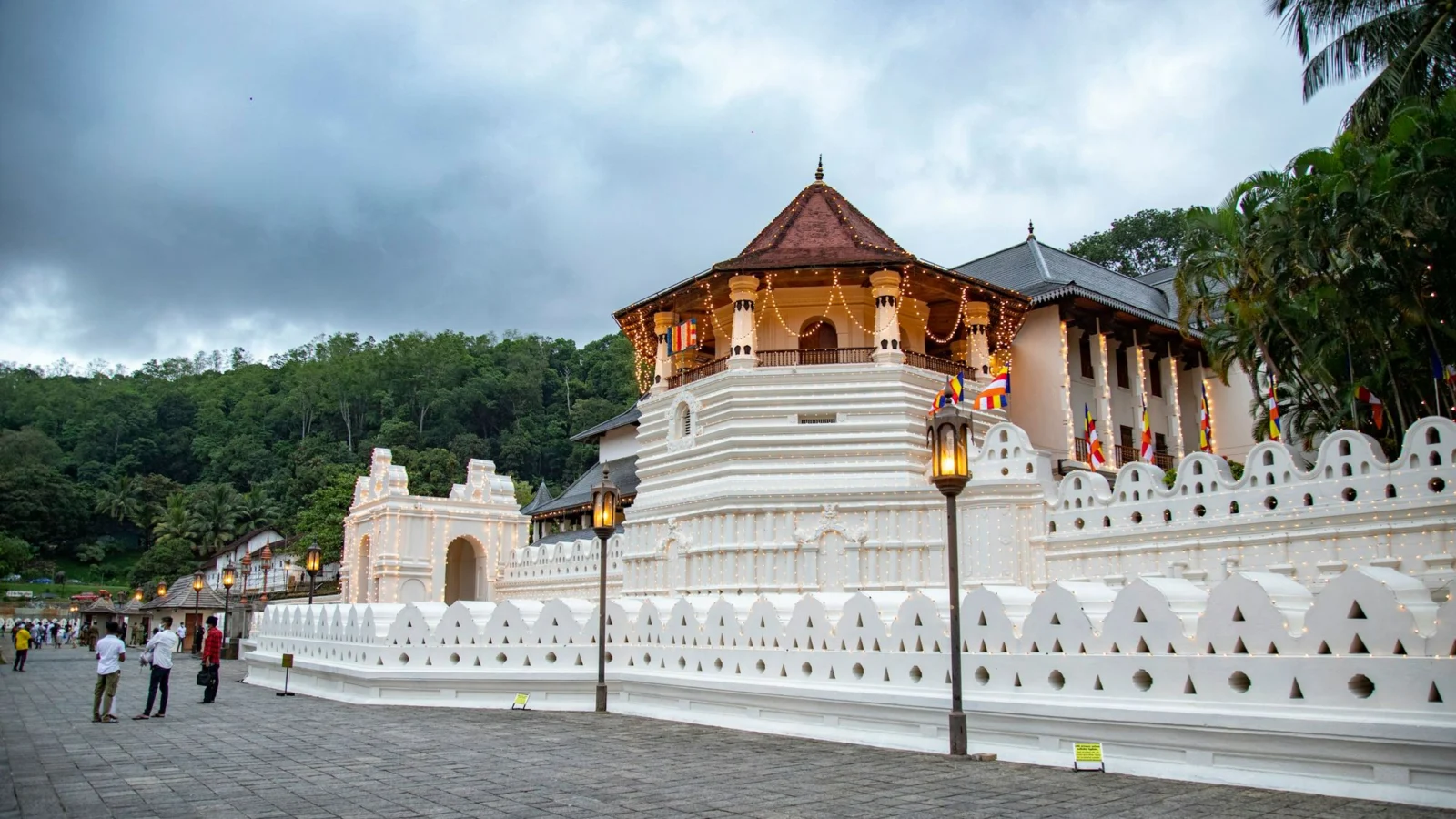
Kandy remains, in a very real sense, the symbolic capital of the Udarata today, long after the kingdom itself ended. The Temple of the Sacred Tooth Relic, Sri Dalada Maligawa, stands beside Kandy Lake and houses what Buddhist tradition holds to be a tooth relic of the Buddha, making it one of the most important sites of Buddhist pilgrimage and devotion in the world, not just in Sri Lanka. Each year the Esala Perahera, a major procession involving drummers, traditional dancers and decorated elephants, fills the city’s streets, a living continuation of ceremonial traditions that predate British rule entirely.
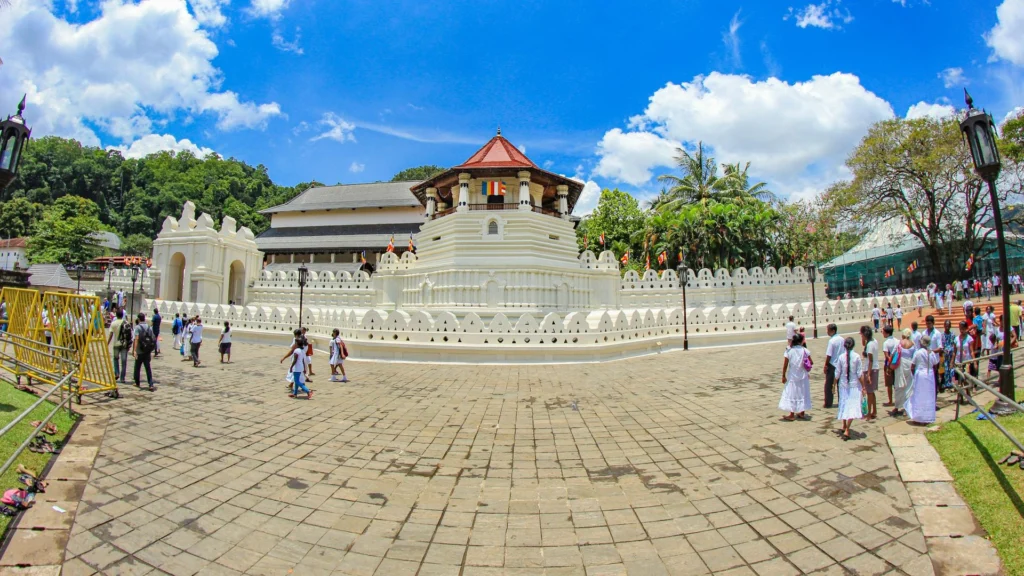
That continuity goes beyond ceremony. The temple remains an active, functioning site of daily worship, not simply a historic monument preserved for visitors, with rituals performed multiple times a day following traditions that long predate the kingdom’s end in 1815. Walking through central Kandy today, past the lake and up to the temple, is in a real sense walking the same ceremonial route the kingdom’s own residents would have followed, even as the plantation economy and, eventually, a modern city grew up around that unchanged religious core.
From coffee to tea: the economic transformation
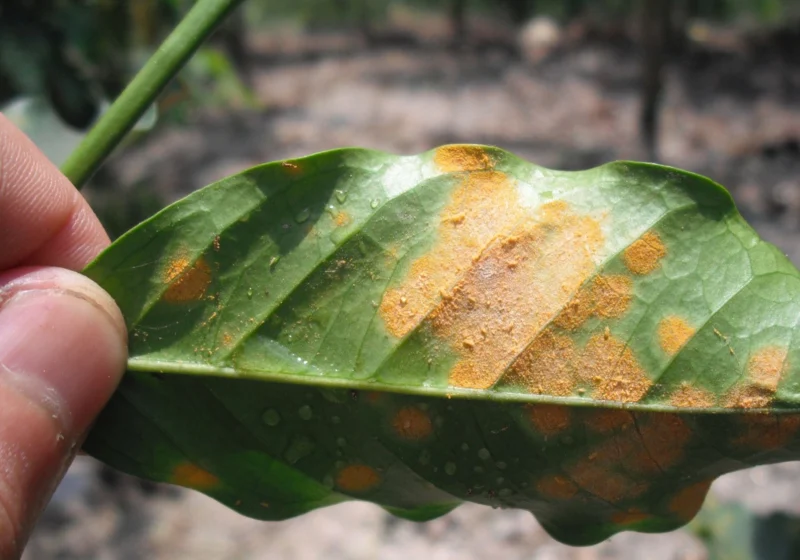
Coffee arrived first in the newly opened hill country, covering the hillsides through much of the nineteenth century and briefly making Ceylon one of the world’s significant coffee producers. When coffee leaf rust devastated that crop through the 1870s and 1880s, a story covered in full in our companion piece on the subject, planters across the Udarata turned to tea instead, following the lead James Taylor had already demonstrated at Loolecondera in 1867. Within a generation, the hill country’s economic identity had shifted entirely, and the Udarata became, in effect, the birthplace of what the world now knows as Ceylon tea.
The temples that came before the plantations
The Udarata’s religious and architectural history runs deeper than the kingdom itself. Not far from Kandy, in the countryside near Pilimathalawa, stand three Buddhist temples built in the fourteenth century under the earlier Gampola kingdom, which briefly preceded Kandy as the seat of Sinhalese royal power in the hill country: Gadaladeniya, built around 1344 under King Bhuvanekabahu IV; Lankatilaka, built in the same period and under the same king’s patronage; and Embekke, built slightly later, in the mid-to-late 1300s, under King Vikramabahu III, and still celebrated today for its intricately carved wooden pillars. These buildings predate the Kandyan Kingdom’s own founding by well over a century, a reminder that the hill country’s religious and cultural identity was already well established long before Kandy itself became the region’s capital.
What ‘Udarata’ and ‘Kandyan’ mean, and how they differ
It’s worth being precise about the vocabulary here, since the terms get used loosely. Udarata, meaning up-country, is the broader geographic term for Sri Lanka’s hill country, used in contrast with Pahatarata, the low country nearer the coast. ‘Kandyan’ is a narrower term, referring specifically to the kingdom, the royal court, the culture and the growing district centred on Kandy itself. In practice the two overlap heavily, since Kandy was the historic political centre of the wider up-country region, which is part of why you’ll see the terms used almost interchangeably in casual conversation even though they’re not technically identical. We chose Udarata for the brand specifically because it’s the broader, more encompassing word, honouring the whole hill country rather than only its historic capital, while still carrying all of the same history forward in a single Sinhala word.
What the hill country produces today
The historic Kandy growing district, within the broader Udarata, is known today for strong, full-bodied, mid-elevation tea, generally fuller and rounder in character than the lighter, more floral teas associated with higher-elevation districts further up in the hills. It’s within this specific belt that all three of the factories behind Udarata Tea, Embilmegama, Pilimathalawa and Arabegama, are found, which is really why the brand carries this name rather than any other: it’s not a generic reference to Sri Lankan tea broadly, but a specific nod to this particular historic region and the character it produces.
A kingdom remembered each year in procession
The Esala Perahera is the most visible living link between the old kingdom and the present day. Held annually, usually over ten nights in the Esala month, the festival fills Kandy’s streets with drummers, traditional Kandyan dancers, whip-crackers and a procession of decorated elephants, culminating in a grand final night carrying a replica of the Tooth Relic casket through the city. The ceremony’s structure and much of its ritual choreography descend directly from processions held under the Kandyan kings themselves, making it one of the clearest surviving threads connecting the kingdom’s ceremonial life to the Udarata of today, rather than a tradition invented after the fact for visitors.
Why we chose this name
We chose the name Udarata deliberately, to honour this layered history rather than simply describing a flavour profile. It carries the memory of an independent kingdom that held its ground longer than any other on the island, the cultural weight of Kandy as a living religious and ceremonial centre, and the specific agricultural identity of the hills that, after coffee’s collapse, became the place Ceylon tea itself began. A cup of Udarata tea is, in a small way, meant to carry all of that history, the kingdom, the temples, the procession, the plantations that followed, forward with it, not just a flavour, but a place and a story behind it.
Is ‘Udarata’ the same as ‘Kandyan’?
They overlap but aren’t identical. Udarata (up-country) is the broader geographic and historical term for Sri Lanka’s hill country generally, while ‘Kandyan’ most precisely refers to the kingdom, culture and growing district centred specifically on Kandy. In practice, especially in the tea trade, the terms are often used closely together since Kandy was the historic political centre of the wider up-country region.
Can visitors still see signs of the old Kandyan Kingdom today?
Yes. Beyond the Temple of the Sacred Tooth Relic itself, the broader Kandy area retains numerous historic sites from the Kandyan period, including the Royal Palace complex beside the temple and notable fourteenth-century temples in the surrounding countryside, several of which actually predate the kingdom itself. The region’s layout, with Kandy as its historic centre surrounded by hills that were later converted to plantations, still reflects the geography that made the kingdom defensible for so long, and a short drive out from the city in almost any direction will take you past both heritage sites and working tea land within the same afternoon.