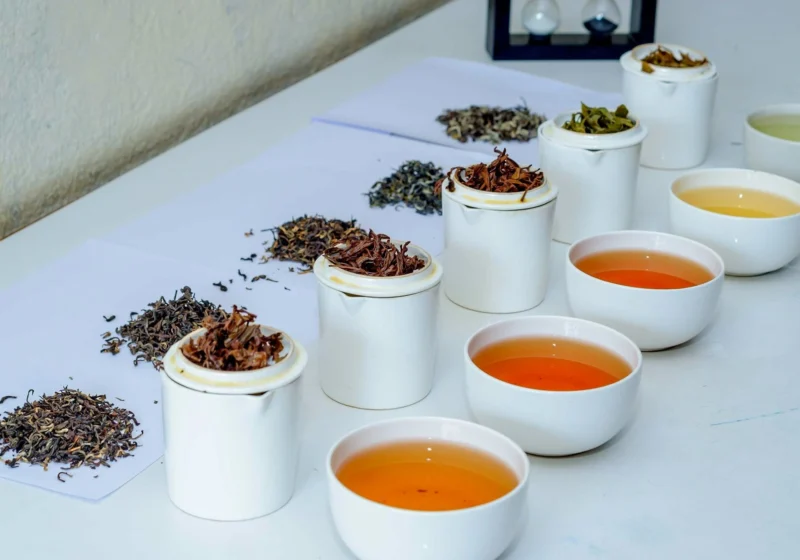

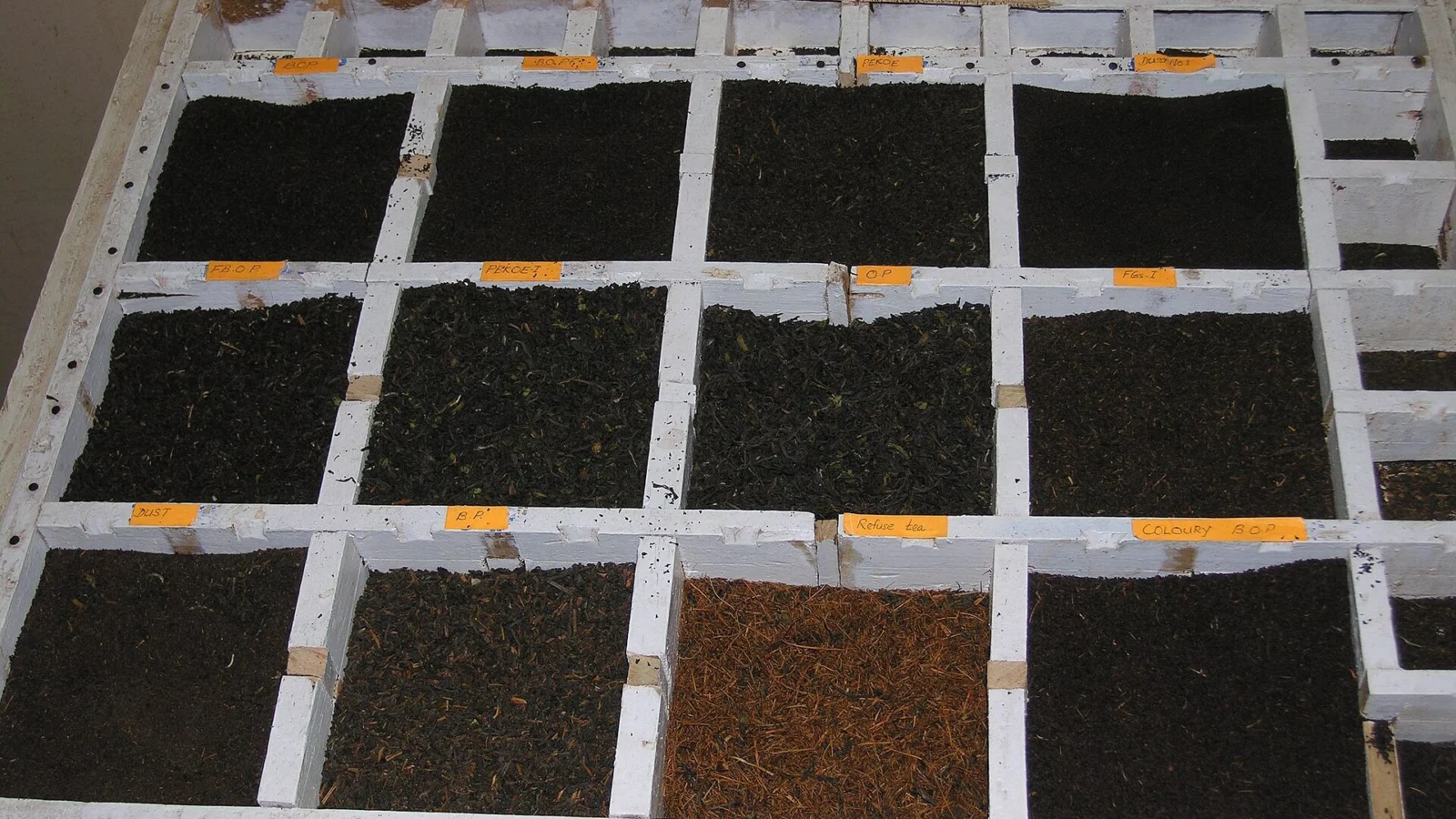
Open a few different packs of Ceylon tea and you will run into a small alphabet soup: OP, OP1, BOP, BOPF, FBOP, sometimes even FBOPF or PD. It looks like a quality ranking, and it is natural to assume the longer the string of letters, the better the tea inside. That is not quite what is going on. Tea grading describes the physical size and style of the leaf particle after processing, not how good the tea tastes. A whole-leaf grade and a broken grade can both be made from excellent, carefully plucked leaf, and both can be made from poor leaf. Grade tells you what to expect from the cup, not whether to expect something good.
For anyone new to Ceylon tea, this can feel like needless complexity on a simple everyday product. In practice, once you understand the handful of ideas behind the system, it becomes genuinely useful information rather than jargon. It tells you, before you even open the pack, roughly how the tea inside will behave in the pot: how fast it will brew, how dark it will go, and how forgiving it will be if you leave it steeping a minute too long.
Where the grading system comes from
Orthodox tea processing, the traditional method still used across much of Sri Lanka’s hill country, naturally produces leaf of mixed sizes once it has been rolled, oxidised and fired. A sorting and sieving stage separates this mixed leaf into size categories, partly for consistency and partly because different particle sizes brew differently and suit different uses. The vocabulary used to describe these categories, Orange Pekoe, Broken Orange Pekoe and so on, dates back to the nineteenth-century tea trade and has stayed in use ever since, even though it describes leaf shape rather than any flower or citrus flavour. “Pekoe” most likely comes from a Chinese term referring to the fine downy hairs on young tea buds, nothing to do with orange at all.
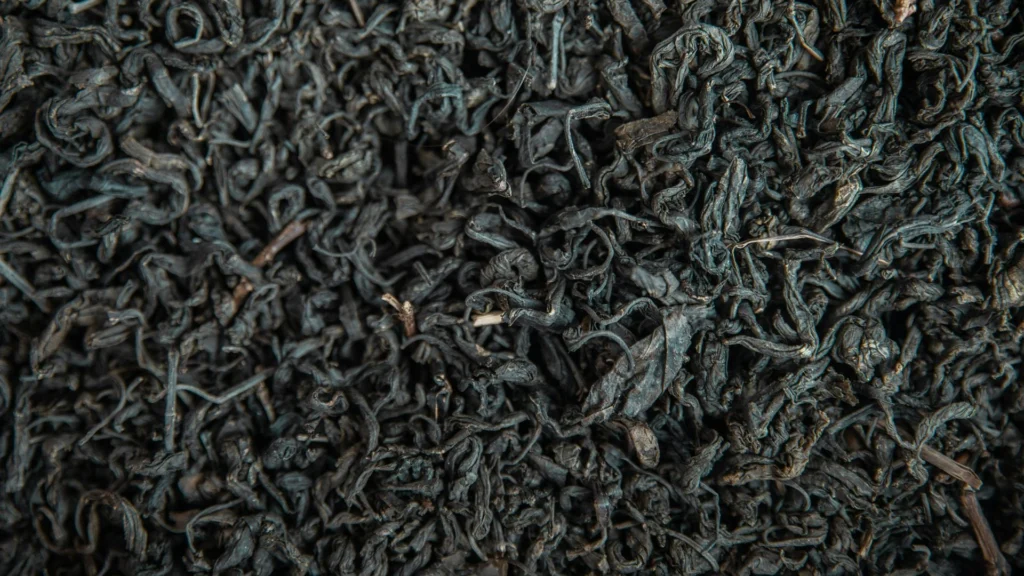
The rolling stage of processing is where most of this size variation is created in the first place. Fresh leaf that has been withered is passed through rollers that twist and macerate it, rupturing the cell walls so oxidation can begin. This process naturally produces a mix of leaf fragments: some stay large and intact, especially the top, less fibrous part of the shoot, while others break into smaller pieces, especially the lower, slightly tougher part of the leaf. Rather than treat this mix as a problem, the orthodox system turns it into a feature, sorting it by size with a series of mesh sieves so that each resulting grade is reasonably consistent within itself, even though the whole batch started out highly varied.
A common myth, cleared up
Orange Pekoe does not mean the tea tastes of oranges, and it is not a flavoured tea. The name is historical and refers to leaf grade and the presence of young, tippy leaf, not to any added fruit flavouring.
The main grades, explained
| Grade | Full name | What it looks like | What it means for the cup |
|---|---|---|---|
| OP / OP1 | Orange Pekoe | Long, thin, wiry whole leaves, often with some tip | Slow to brew, lighter liquor, more delicate aroma |
| Pekoe | Pekoe | Shorter, more rolled whole leaf, less wiry than OP | A fuller body than OP with a similarly gentle brew |
| BOP | Broken Orange Pekoe | Broken leaf particles, medium size | Brews faster, stronger colour and more brisk character |
| BOPF | Broken Orange Pekoe Fannings | Small, fairly uniform particles | Fast, strong, dark brew — common in everyday tea bags |
| FBOP | Flowery Broken Orange Pekoe | Broken leaf with a higher proportion of golden tip | Good body with extra sweetness and aroma from the tips |
| Dust | Dust / PD | Very fine particles, smallest grade | Very fast, very strong, used almost exclusively in bags |
Why particle size changes the brew
This is simple surface-area physics rather than anything mysterious. A whole, wiry OP leaf has comparatively little surface exposed to the hot water relative to its mass, so water has to work its way in gradually, releasing flavour and colour slowly over several minutes. A fine BOPF or dust particle is almost all surface, so hot water extracts nearly everything it has to offer within a minute or two. Neither is better; they are suited to different situations. A whole-leaf grade rewards a slower, more attentive brew and often a second steeping. A fine grade is built for speed and consistency, which is exactly why tea bags, where a quick, reliable strong cup matters more than nuance, are almost always filled with broken grades, fannings or dust rather than whole leaf.
Typical steeping time by grade
Smaller particles have more surface area exposed per gram, so they give up their flavour and colour faster.
General orthodox tea brewing guidance; see also the companion brewing guide on this journal.
Does grade affect quality at all?
Indirectly, yes, in two ways. First, the proportion of golden or silver tip, the youngest, most delicate growth, in a batch is often reflected in the grade name (the “flowery” in FBOP, for instance) and tippy leaf tends to add sweetness and aroma, which many drinkers associate with higher quality. Second, within any grade, the plucking standard, the care taken during withering and the skill of the oxidation judgement call all matter enormously, and none of that is visible from the grade letters alone. A well-made BOP from a careful factory will usually taste better than a carelessly made OP from a rushed one. Grade is a useful signal about style and brewing behaviour. It is not a substitute for knowing who made the tea and how.
A grade is not a certificate
Because grading describes leaf size rather than taste or origin, it is possible for teas of very different quality to carry the same grade letters. If you care about where your tea actually comes from, look for the estate or region named on the pack, not just the grade.
Choosing a grade for how you actually drink tea
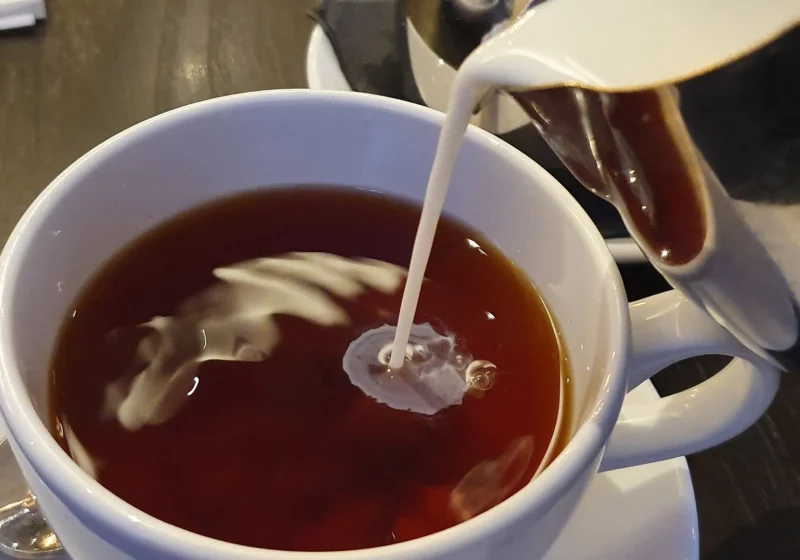
If you tend to drink tea plain or with a light hand on the milk, and you have the few extra minutes a proper steep takes, a whole-leaf OP or Pekoe grade will show you more of the tea’s character: more aroma, a gentler astringency, and often a pleasant second cup from the same leaf. If your mornings are rushed, or you like a strong, dark cup with milk that can stand up to a good dose of sugar or jaggery, a BOP or BOPF grade will get you there reliably in two to three minutes without needing much technique at all. Many households are happiest keeping both on hand: a whole-leaf tea for a slow Sunday afternoon, and a broken grade for a weekday rush.
Beyond the common grades: a few you might also encounter
Retail packs mostly stick to the handful of grades covered above, but if you ever look at a tea broker’s catalogue or an estate’s full production list, you will see a longer alphabet still: FBOPF (Flowery Broken Orange Pekoe Fannings, combining fine particle size with a good proportion of tip), GFBOP (Golden Flowery Broken Orange Pekoe, denoting an especially high golden-tip content), and various numbered sub-grades such as OP1 or BOP1, where the number distinguishes between batches or qualities within the same basic size category at a particular factory or auction lot. None of this changes the underlying logic. Every added letter is still describing some combination of particle size, leaf style and tip content, not an independent quality score.
How grade shows up on the auction floor
At the Colombo tea auction, where much of Sri Lanka’s orthodox tea is sold to exporters and brokers, lots are catalogued by estate, grade and invoice number, and buyers taste samples before bidding. Because tasters already know roughly what to expect from a given grade, say, a brisk, fast-brewing BOP versus a gentler, slower OP, grade acts as a kind of shorthand that lets a buyer focus their attention on judging the specific quality of that lot within its category, rather than having to establish from scratch what kind of tea they are even looking at. This is really the whole point of the grading system: it is a shared, trade-wide vocabulary that makes comparison faster and more reliable, for professionals and curious home drinkers alike.
CTC versus orthodox: a different manufacturing path entirely
It’s worth briefly distinguishing grade from manufacturing method, since the two are often confused. Everything described above assumes orthodox manufacture, the traditional method of withering, rolling, oxidising and firing whole leaf, which is what most Ceylon tea, and virtually all of Sri Lanka’s high-grown tea, is made by. A separate method called CTC, short for crush, tear, curl, uses mechanical rotors to shred the leaf into small, uniform granules in a single step rather than rolling it gently. CTC tea is almost always small and granular by design, brews very fast, and is widely used for mass-market tea bags around the world, particularly from origins such as Kenya and parts of India. Sri Lanka produces comparatively little CTC tea, favouring the slower, more labour-intensive orthodox method that preserves more of the leaf’s individual character. This is part of why Ceylon tea has a reputation for complexity that some faster, more industrial production methods don’t aim for.
A quick way to remember it
If you only take one thing from the grading system, make it this: smaller leaf, shorter steep. Whatever the exact letters on the pack, judging the particle size by eye and adjusting your steeping time accordingly will get you most of the way to a well-brewed cup, even before you know what any individual abbreviation technically stands for. Over time, as you drink more teas and start noticing which grades you personally gravitate toward, the letters stop being jargon and start being useful shorthand for your own preferences.