
Every cup of Ceylon tea, including every cup of Udarata, traces back to a single hillside not far from Kandy, and to one determined, curious planter. In 1867, on the Loolecondera estate in the Hewaheta area, James Taylor cleared 19 acres, about 7.7 hectares, of land and planted it with tea. It became the island’s first commercial tea field, and within little more than a decade it would help reshape Ceylon’s entire economy.
A teenager sent to the coffee hills
Taylor was born in Scotland in 1835 and arrived in Ceylon in 1852, still only seventeen years old, to work on the island’s then-dominant crop: coffee. He was posted to Loolecondera estate in the Kandy district, owned at the time by Harrison and Leake, trading as Keir Dundas & Co., and spent his early years there learning the land, the climate and the demanding daily work of plantation management. Colleagues and later historians consistently describe him as a careful, methodical and genuinely curious planter, the kind of person inclined to experiment rather than simply follow established practice.
A trip to India that changed everything
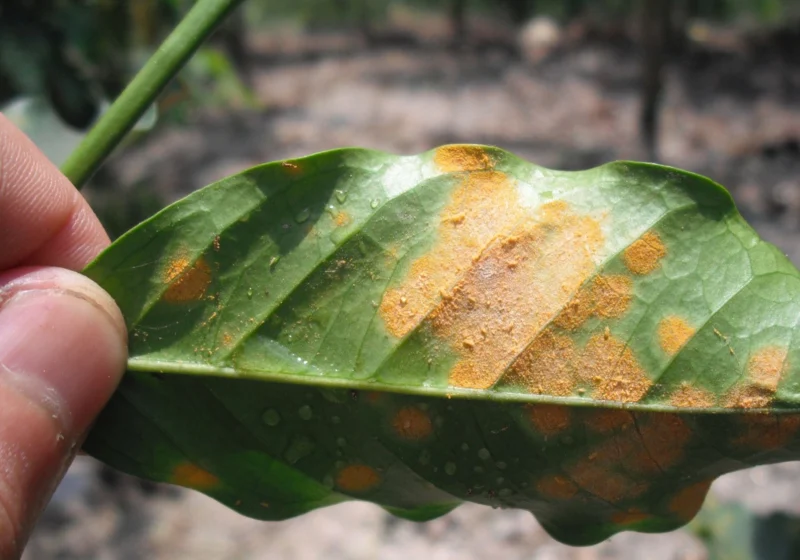
By the mid-1860s, Ceylon’s coffee industry was already showing early signs of trouble from a fungal disease that would later be identified as coffee leaf rust. In 1866, on the instruction of estate owner G.D.B. Harrison, Taylor travelled to India specifically to study how tea was being cultivated and processed there. He returned with both knowledge and tea seed, collected in part from the Peradeniya Botanical Gardens, where experimental tea plantings dated back even further, to 1839, when seed had first been imported from Assam.
- 17Taylor’s age when he arrived in Ceylon, 1852
- 19acres cleared and planted with tea in 1867
- 40years Taylor spent living and working at Loolecondera
Tea made on a verandah
There was no purpose-built tea factory anywhere on the island when Taylor’s first tea field matured, so he processed the earliest leaf by hand, using whatever was available. Historical accounts describe leaf being rolled by hand on tables set up on the verandah of his bungalow, with firing done over simple clay stoves rather than any mechanised dryer. It was improvised, labour-intensive work, and it produced tea good enough that other planters in the district began to take notice and ask questions, which is really how the idea started to spread beyond Taylor’s own hillside.
A timeline worth having in one place
| Year | Event |
|---|---|
| 1835 | James Taylor born in Scotland |
| 1839 | Tea seed first imported from Assam and planted experimentally at the Peradeniya Botanical Gardens |
| 1852 | Taylor arrives in Ceylon, aged 17, and is posted to Loolecondera estate |
| 1866 | Taylor travels to India to study tea cultivation, on the instruction of estate owner G.D.B. Harrison |
| 1867 | Taylor clears and plants 19 acres (field No. 7) at Loolecondera with tea, Ceylon’s first commercial planting |
| Early 1870s | Coffee leaf rust devastates Ceylon’s coffee industry, accelerating the shift to tea across the hill country |
| 1892 | James Taylor dies at Loolecondera, having lived and worked there for the rest of his life |
How the news spread beyond one hillside
Taylor’s early success at Loolecondera wasn’t an isolated secret kept to himself; word travelled through the close-knit community of coffee planters in the Kandy district, many of whom were watching their own coffee bushes struggle at the same time his modest tea field was thriving. As more planters began converting at least part of their own land to tea through the 1870s and into the 1880s, the industry’s infrastructure, nurseries, specialist tea machinery, trained factory staff, grew up around this organic, planter-by-planter spread rather than through any single centrally planned rollout. Within a generation, tea had gone from one experimental 19-acre field to the dominant crop across the entire hill country, a remarkably fast transformation for an agricultural economy to undergo.
What became of Loolecondera
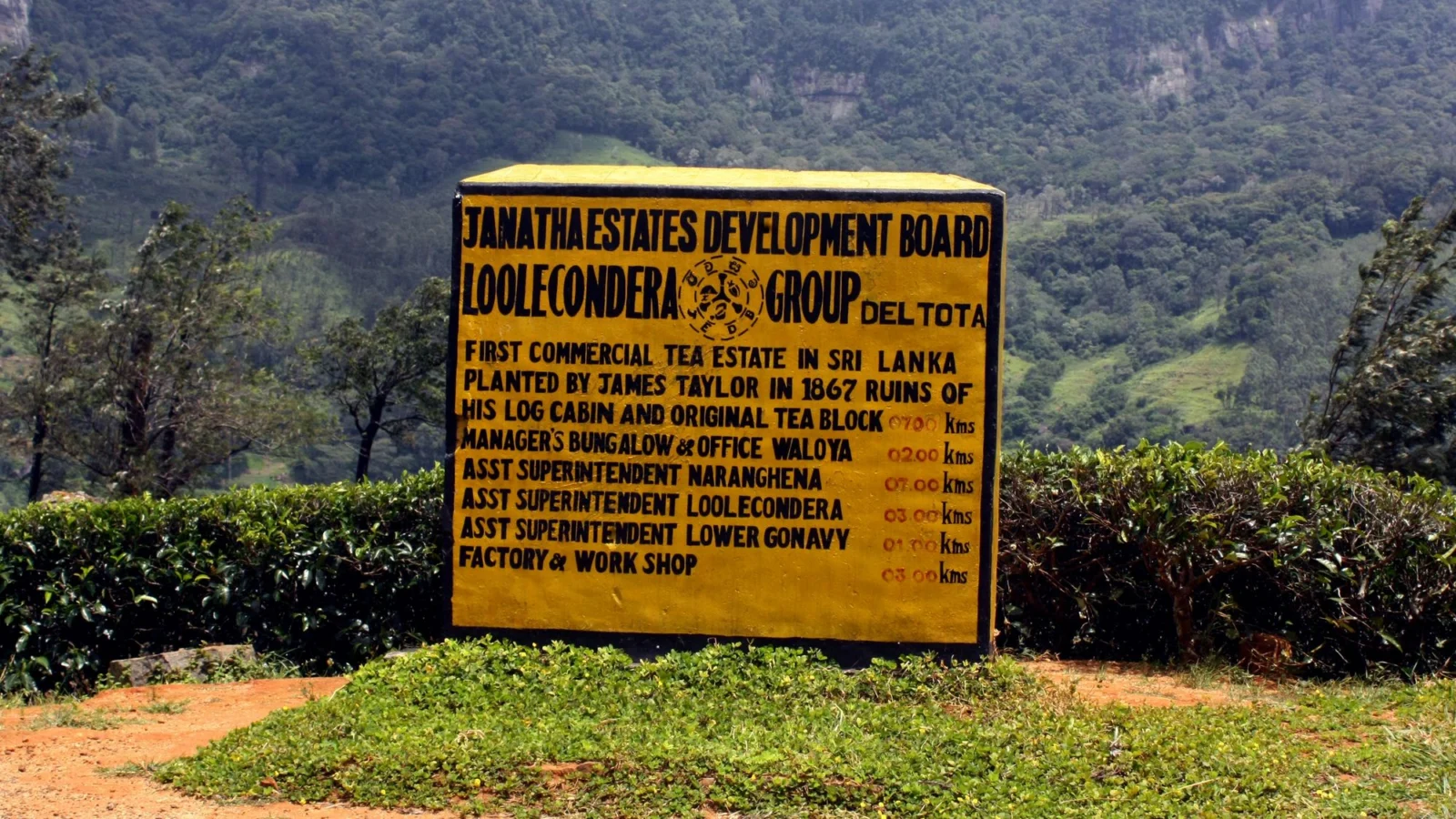
The estate where it all began is still in existence today, in the Deltota area of the Kandy district, and still produces tea. A nameboard at the estate commemorates its place in history, identifying it plainly as the first commercial tea estate in Sri Lanka, planted by James Taylor in 1867. The site, along with the broader Hewaheta and Deltota area, remains a point of interest for anyone tracing the roots of the industry back to where it genuinely started.
A detail often left out
Taylor didn’t simply switch from coffee to tea overnight on a hunch. Coffee leaf rust, caused by the fungus Hemileia vastatrix, had already begun appearing in Ceylon by the time his tea experiment was maturing, and it went on to devastate the island’s coffee industry through the 1870s. Taylor’s early tea planting turned out to be remarkably well timed, arriving just before an entire economy badly needed an alternative crop.
A planter known for more than just tea
Taylor’s reputation at Loolecondera wasn’t built on tea alone. Contemporary and later accounts describe him as an unusually hands-on and practically minded estate manager by the standards of his time, someone who involved himself directly in the physical, mechanical details of production rather than simply overseeing from a distance. This hands-on temperament is almost certainly part of why he was the one who followed through on an experimental tea planting at all, when plenty of other coffee planters facing the same early signs of disease pressure in the 1860s did not pursue the same path with the same persistence.
Why Loolecondera, specifically, and not somewhere else
It’s worth asking why this particular hillside, rather than any of the dozens of other coffee estates scattered across the central highlands at the time, became the starting point for an entire industry. Part of the answer is simply opportunity: Taylor happened to be stationed there, under an estate owner willing to fund his research trip to India, at more or less exactly the moment the coffee crop was beginning to show real strain. Part of it is also elevation and climate: the Hewaheta and Deltota area sits within the mid-to-high elevation band that, as it later turned out, suits tea cultivation very well, meaning Taylor’s experimental planting had a genuine environmental advantage behind it as well as good timing.
The father of Ceylon tea
Taylor remained at Loolecondera for the rest of his working life, roughly four decades on the same estate where he’d arrived as a teenager, and died there in 1892. He’s buried in the Mahaiyawa cemetery in Kandy and is remembered today, without much dispute, as the father of Ceylon tea, the planter whose careful, experimental streak turned a single hillside’s worth of seedlings into the foundation of an entire national industry.
More than a century and a half later, the Kandyan hills he worked in are still producing some of the island’s most characterful tea, including the leaf that goes into every Udarata cup. It’s a direct, traceable line from one determined planter’s 19 acres to the tea in front of you today.
Why this story is worth telling at all
It would be easy to treat the James Taylor story as a dry historical footnote, a date and a name worth memorising and then forgetting. We don’t think it deserves that treatment. Every structural decision that still shapes Sri Lankan tea today, orthodox rather than mechanised processing, estates built around factories close to the fields they serve, the whole mid-to-high elevation geography of where the best tea grows, traces back in some fashion to the particular, somewhat accidental set of circumstances surrounding one planter’s experiment in 1867. Understanding that origin doesn’t just satisfy curiosity; it genuinely helps explain why Ceylon tea tastes and is made the way it is today, a century and a half on from a single hillside near Kandy.
Did James Taylor profit personally from starting the Ceylon tea industry?
Taylor worked as an estate planter and manager rather than as an independent entrepreneur who owned the land himself; Loolecondera belonged to its estate owners throughout his time there. He is remembered for his technical and agricultural contribution rather than for building personal wealth from the industry he helped found, and historical accounts generally describe him as living a modest, work-focused life at the estate until his death.
Is Loolecondera estate open to visitors today?
The estate is a working tea property in the Deltota area near Kandy, and its historical nameboard marking the site of the first planting is a point of interest for visitors tracing the industry’s history. As with any working estate, it’s sensible to check current access and visiting arrangements locally before planning a trip, since this can change over time.
Was James Taylor the very first person to grow tea in Ceylon?
Not quite, and it’s worth being precise here. Experimental, small-scale tea plantings existed earlier, including seed brought from Assam and planted at the Peradeniya Botanical Gardens as far back as 1839. What makes Taylor’s 1867 planting historically significant is that it was the first commercial planting, grown with the explicit intention of producing and selling tea at scale, rather than an earlier botanical curiosity or research trial. That distinction, experimental versus commercial, is why 1867 and Loolecondera specifically are remembered as the industry’s starting point.